PMCG at the Forefront of Pan-Asian Connectivity: CEO Alex Aleksishvili Participated as a Speaker at the ADB Annual Meeting
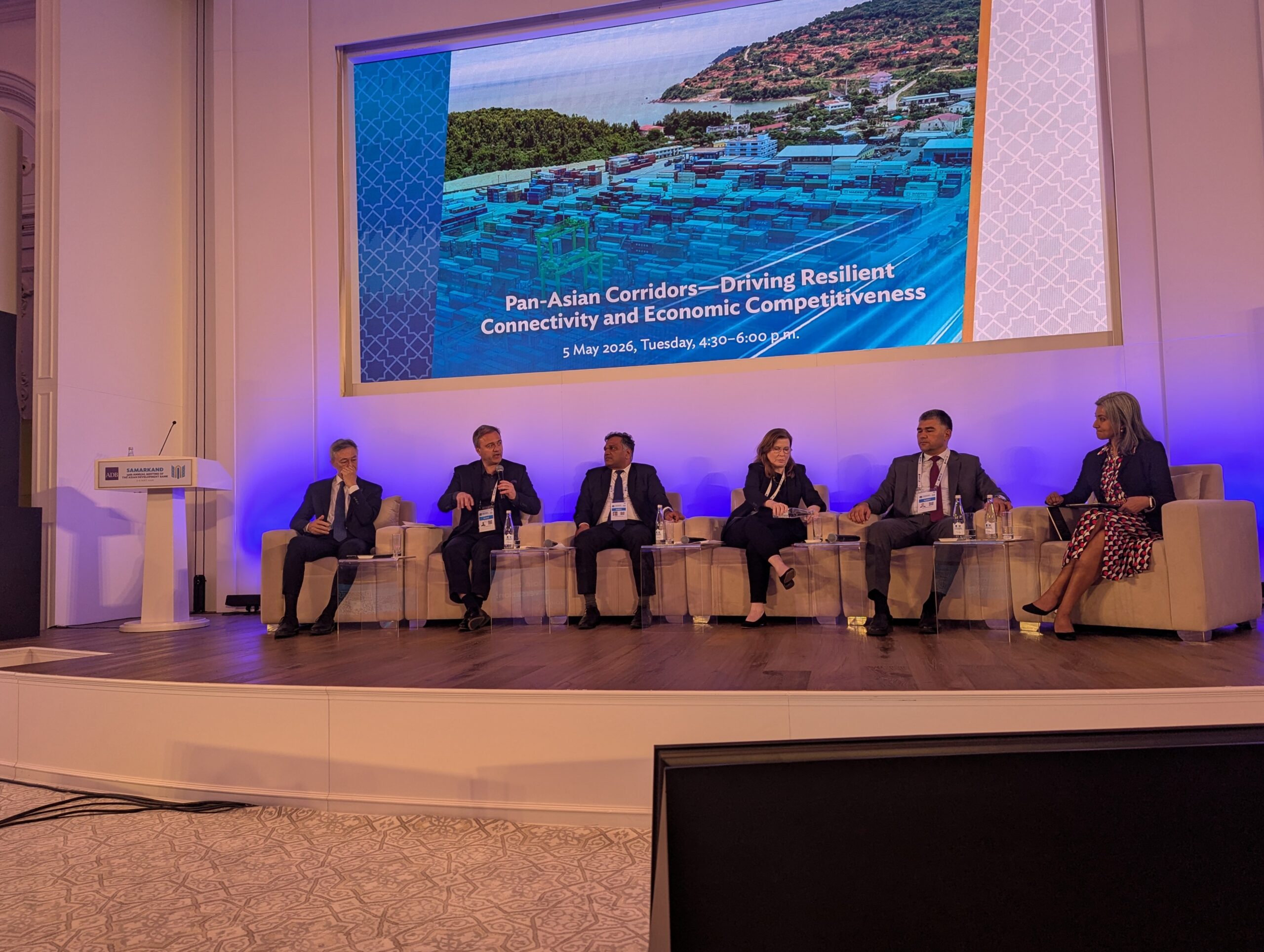

At the Asian Development Bank (ADB) Annual Meeting held in Samarkand on May 5, 2026, PMCG CEO Alex Aleksishvili participated in a panel which focused on the growing role of the Trans-Caspian Middle Corridor and the need to transform regional connectivity into sustainable economic growth.
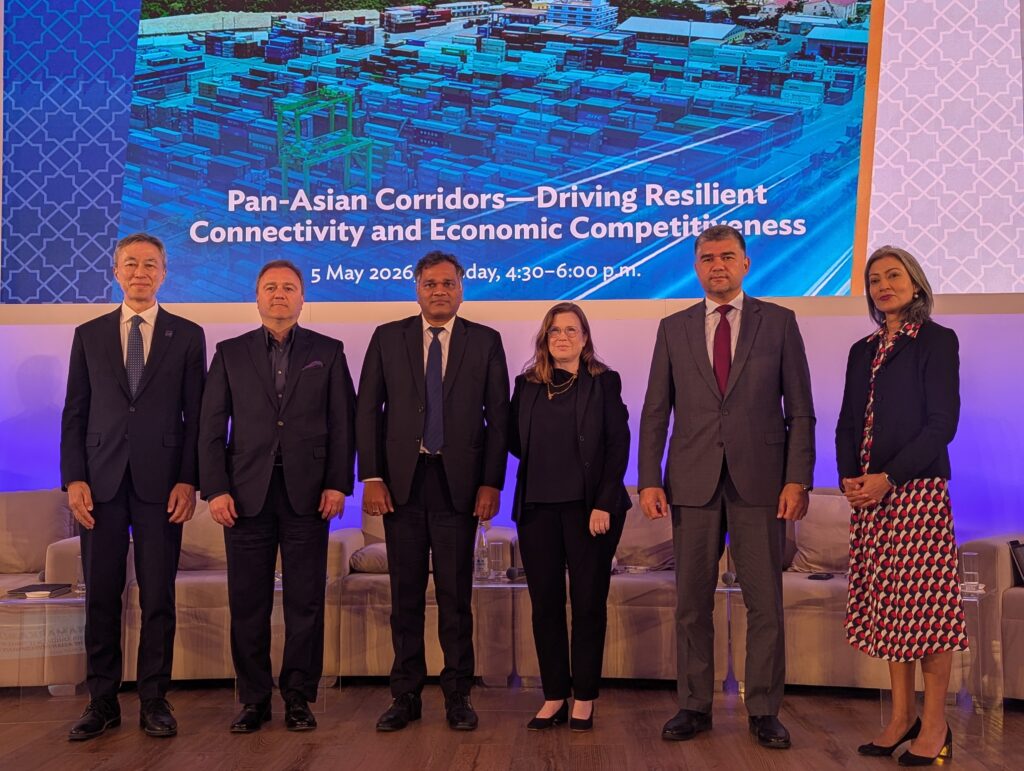
The high-level panel, moderated by international broadcast journalist and Chancellor of Bath Spa University Sharanjit Leyl, brought together distinguished speakers including Christine Engstrom, Director General of Sectors Department 3 at ADB; Hideaki Iwasaki, Director General of Sectors Department 1 at the Asian Development Bank; Jasurbek Choriyev, Deputy Minister of Transportation of Uzbekistan; Rajat Saini, CEO of the National Industrial Corridor Development Corporation; and Alex Aleksishvili. The discussion examined how regional initiatives such as CAREC, GMS, and SASEC are evolving beyond transport connectivity into broader economic corridors. Aleksishvili emphasized that the current development of the Middle Corridor represents an important opportunity for countries across Central Asia and the South Caucasus to strengthen trade, deepen regional integration, and create greater economic value through participation in global supply chains.
He noted that the region has experienced significant growth in recent years, accompanied by a rapid increase in trade across Central Asia and the South Caucasus. Trade among Central Asian countries has nearly tripled over the last five years, while trade between the corridor region and both China and the European Union has also increased substantially.
Aleksishvili also highlighted that geopolitical developments have further increased the strategic importance of the Trans-Caspian corridor in connecting Europe, China, and Central Asia. As global supply chains continue to diversify, the corridor and its participating countries are playing a growing role in facilitating trade between major economic markets.
“The objective is not simply transportation,” Aleksishvili stated during the discussion. “Economic corridors should create economic growth, employment, investment, and value creation for the countries involved.”
From Transport Connectivity to Economic Growth
Aleksishvili argued that the next phase of corridor development depends not only on infrastructure investments, but also on efficient trade systems and institutional coordination.
While connectivity infrastructure across the region has expanded significantly, he highlighted several areas where further coordination and modernization could strengthen corridor efficiency, including greater alignment of trade regulations, enhanced harmonization of customs procedures, and more consistent implementation practices across countries.
“We do not yet have a fully integrated economic corridor,” Aleksishvili noted. “There is strong potential to deepen coordination among the existing regulatory frameworks.”
He emphasized the importance of advancing harmonization in customs procedures, border operations, and digital trade systems to support smoother and more efficient corridor operations.
According to Aleksishvili, the long-term competitiveness of economic corridors will increasingly depend on regulatory alignment, digital integration, and more efficient cross-border procedures.
He also underlined that macroeconomic stability, disciplined public financial management, resilient infrastructure, and business-friendly regulations remain essential for sustainable corridor development and long-term investment.
Aleksishvili further stressed that successful economic corridors require stronger institutional coordination and greater private sector participation across transport, logistics, trade financing, insurance, and related services.
PMCG’s Work on Regional Connectivity
PMCG has implemented several ADB-financed initiatives under the CAREC framework focused on regional trade and connectivity. In addition to Aleksishvili’s keynote participation at the ADB Annual Meeting in Samarkand, PMCG also hosted the “Green City: Transforming Urban Landscapes for a Sustainable Tomorrow” panel discussion as part of the Annual Meeting activities.
PMCG’s work under CAREC includes initiatives related to the CAREC Trade and Investment Facilitation concept, support for regional coordination on trade policy and corridor development, and technical assistance to strengthen countries’ capacity to design and implement Free Trade Agreements.
The company has also delivered technical assistance focused on reducing cross-border barriers, improving trade processes, and strengthening institutional frameworks required for corridor functionality.
In parallel, PMCG is implementing projects supported by the U.S. Government, including the Trans-Caspian Trade Route (TCTR) initiative, where PMCG is subcontracted by AECOM. These projects focus on improving trade competitiveness, logistics performance, operational coordination, and addressing regulatory and operational challenges affecting corridor efficiency.
Looking Ahead
As regional connectivity continues to evolve, Aleksishvili emphasized that the long-term success of the Trans-Caspian corridor will depend not only on physical connectivity, but also on the ability of participating countries to transform transport routes into efficient economic systems capable of generating investment, trade growth, and broader economic benefits.