PMCG Provides Strategic Vision at the American-Georgian Business Council (AGBC) Annual Meeting in Washington, DC
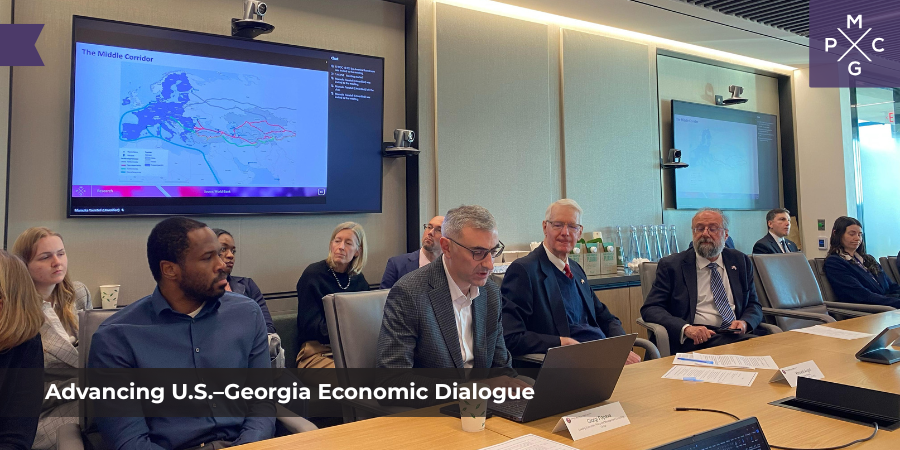

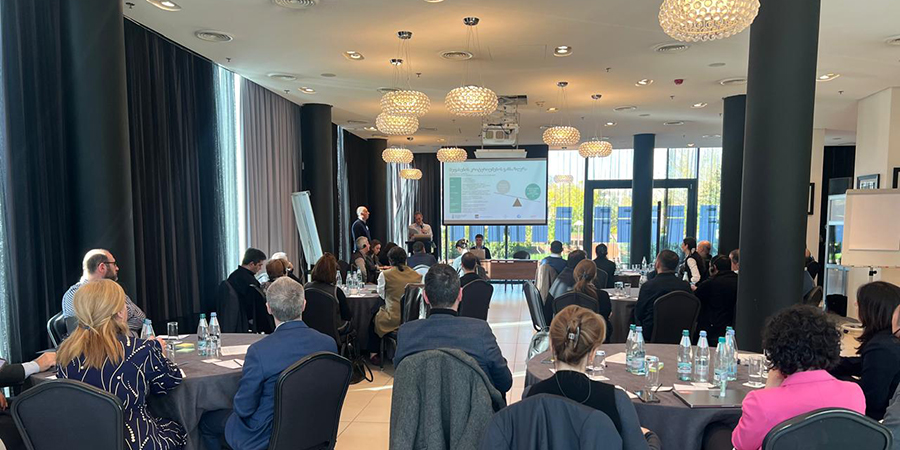
On December 3, PMCG once again contributed to high-level dialogue on U.S.–Georgia economic cooperation during the American-Georgian Business Council (AGBC) 28th Annual Meeting titled “Georgia: Black Sea Gateway to Greater Central Asia” in Washington, DC. Representing the organization, Lead Economist Giorgi Papava delivered an in-depth presentation, Georgia–U.S. Bilateral Relations and New Perspectives, which explored key trends, emerging challenges, and forward-looking opportunities shaping the partnership.
Alongside PMCG, the AGBC Annual Meeting featured contributions from high-level representatives of the World Bank, the International Monetary Fund (IMF), the U.S. International Development Finance Corporation (DFC), and the U.S. Department of Commerce, reflecting the breadth of institutional engagement in discussions on regional development and connectivity.
Key Insights on Bilateral Economic Relations
Papava presented an overview of bilateral economic ties between 2015 and 2024, highlighting long-term patterns in trade, investment, and financial flows. He noted steady growth in imports and remittances from the United States, as well as the expanding role of U.S. investment, particularly in Georgia’s ICT sector. These developments underscore the deepening economic linkages and the continued relevance of U.S. engagement in Georgia’s evolving economic landscape.
Changes in U.S. Foreign Assistance
A major focus of the presentation was the trajectory of U.S. development assistance. Between 2015 and 2024, Georgia received approximately USD 1.5 billion in support, including more than USD 720 million implemented through USAID. This assistance has played a critical role in advancing economic modernization, governance reforms, and greater competitiveness. With the closure of USAID operations in 2024, Papava emphasized the importance of identifying new avenues of cooperation and sustaining productive dialogue.
The Strategic Role of the Middle Corridor
Papava highlighted the rising strategic importance of the Middle Corridor, the transcontinental route that connects China and Central Asia to Europe through the South Caucasus. Although challenges remain related to capacity, cost, and logistics, Georgia’s geographic position and ongoing infrastructure development strengthen its role within this increasingly significant transport corridor. Projects such as the Poti Port expansion, railway modernization, and advancement of the Anaklia Deep Sea Port have potential to further enhance the region’s ability to attract diversified trade and investment.
Regional Dynamics and the C5+1 Platform
While Georgia is not formally part of the C5+1 platform, Papava noted the country’s relevance within broader regional dynamics. Growing U.S. engagement in Central Asia, particularly in energy, supply chain diversification, and transport connectivity, creates opportunities for Georgia to serve as a link between Central Asian markets and European partners. This places Georgia within a wider strategic context shaped by transregional cooperation.
PMCG’s Ongoing Commitment
Through its active role at the AGBC Annual Meeting, PMCG reinforced its position as a contributor to U.S.–Georgia policy dialogue, relying on its international experience and presence in Georgia to support forward-looking economic cooperation. Papava stressed the importance of renewing strategic engagement and adapting to a rapidly changing global environment. Drawing on its global perspective and regional expertise, PMCG will continue providing research, analysis, and strategic guidance that informs long-term development across the Caucasus and Central Asia, while supporting deeper economic connectivity between the United States and the region.
Recent News