City Challenges: Engaging Communities in Developing Green and Inclusive Urban Solutions

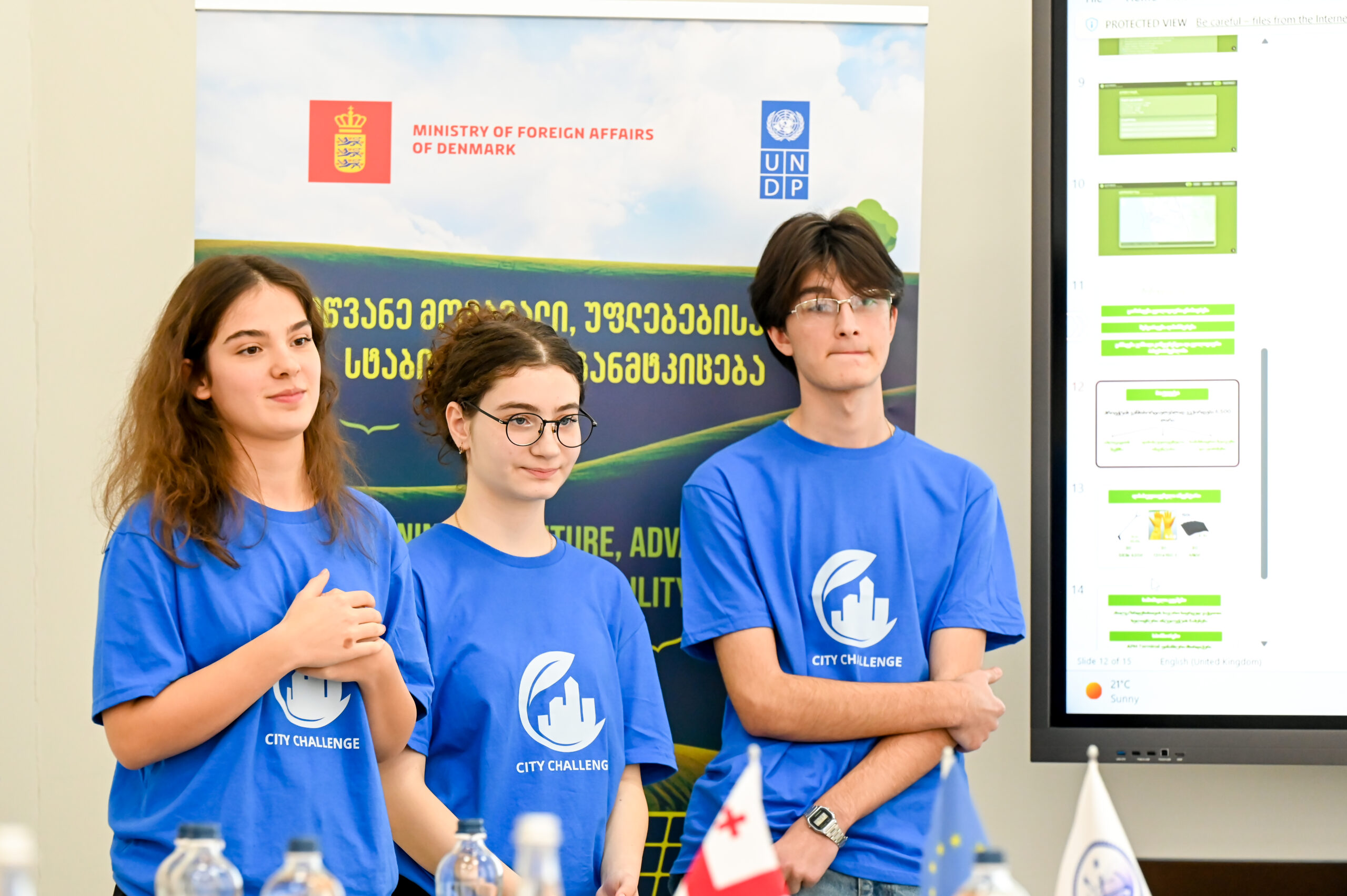
Students, teachers, activists, and young innovators came together across five Georgian cities: Telavi, Kutaisi, Batumi, Poti, and Khobi, with a shared purpose, to reimagine how their hometowns could become greener, more inclusive, and more resilient.
The City Challenge, implemented by UNDP and PMCG under the EU-funded “Mayors for Economic Growth” programme and “Greening the Future, Advancing Rights and Stability: Spurring an Inclusive and Green Transition with Responsive Governance in the Eastern Neighborhood Region” (GFP), funded by the Government of Denmark, invited residents to identify local issues and co-design solutions with mentors. This participatory journey encouraged communities to gather and respond to the needs and issues, identified in their cities.
A Collaborative Journey Toward Smarter, Greener Cities
The City Challenge aimed to foster citizen-driven innovation, strengthen local capacities, and encourage the integration of green, circular, and climate-resilient principles into community-led solutions. Across the five participating cities, residents had the opportunity to engage in a series of structured activities that helped them define local challenges and shape practical ideas.
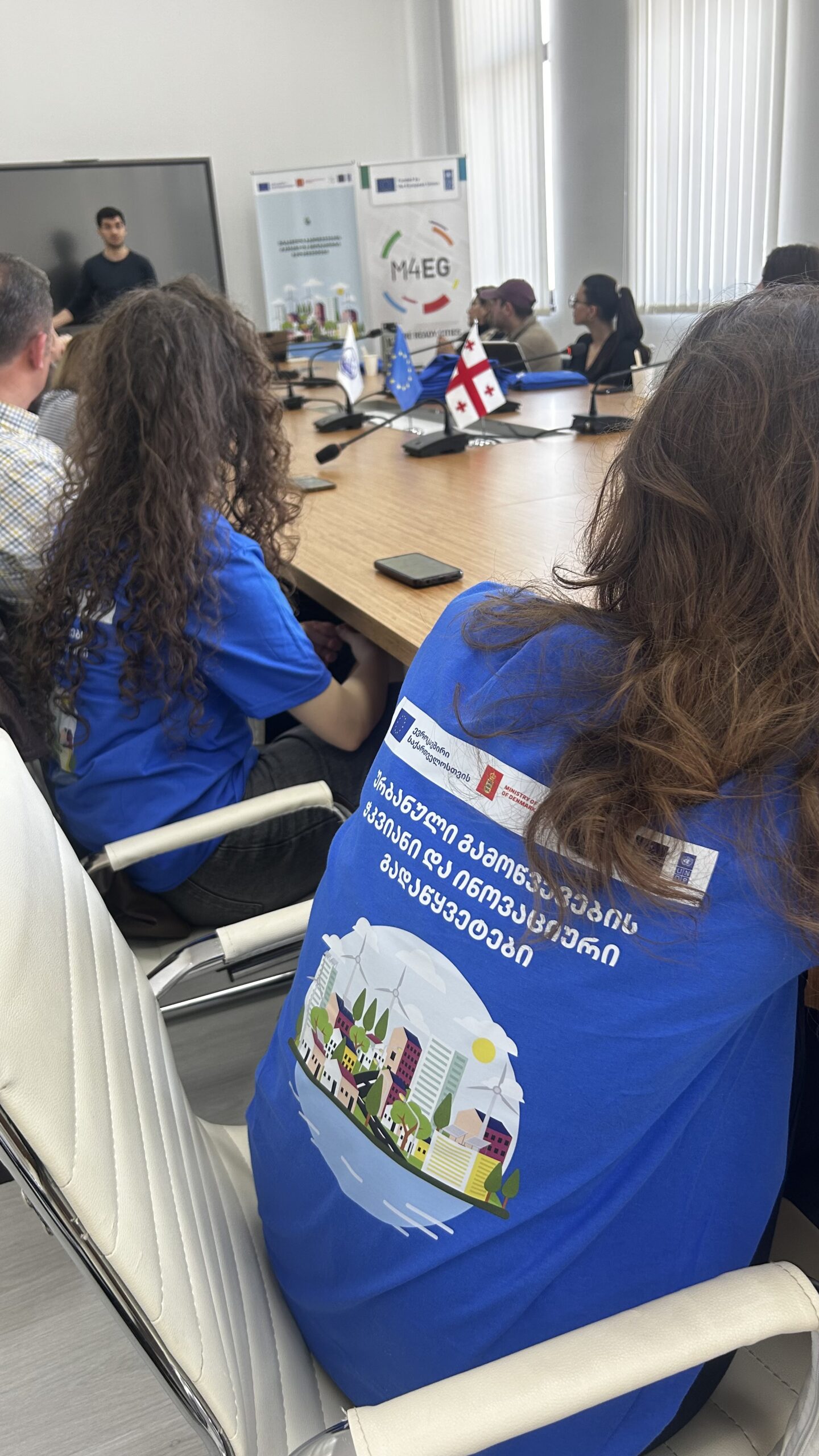
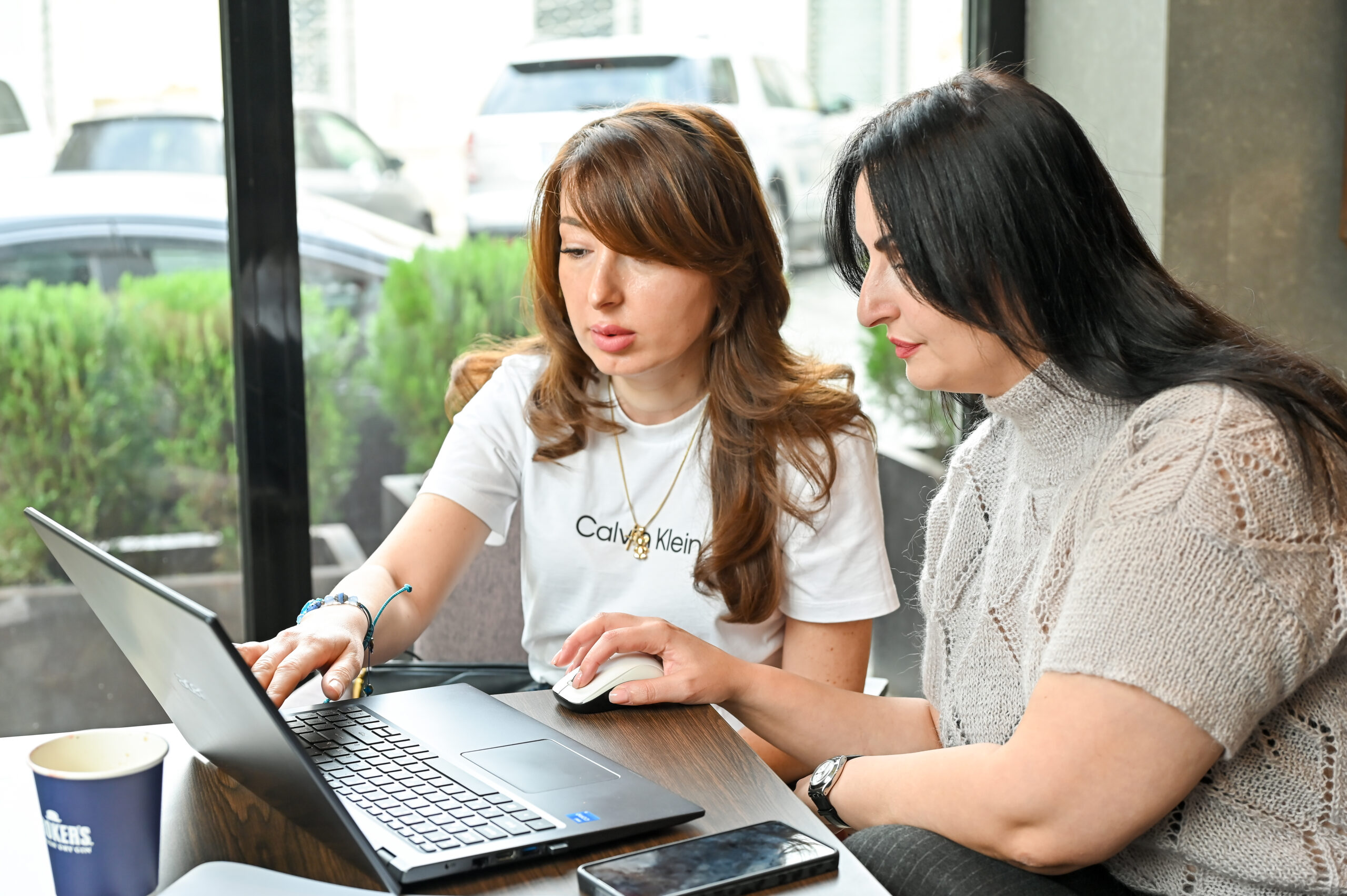
The journey began by collecting public opinion around local issues via online survey in these five cities. Later, residents had the opportunity to apply in the City Challenge with their innovative ideas, to address these challenges and participate in the workshops designed to support the teams sophisticate their ideas.
Guidelines for the City Challenge provided a framework for developing and refining proposals, while open calls and information sessions allowed participants to explore their ideas and understand the process.
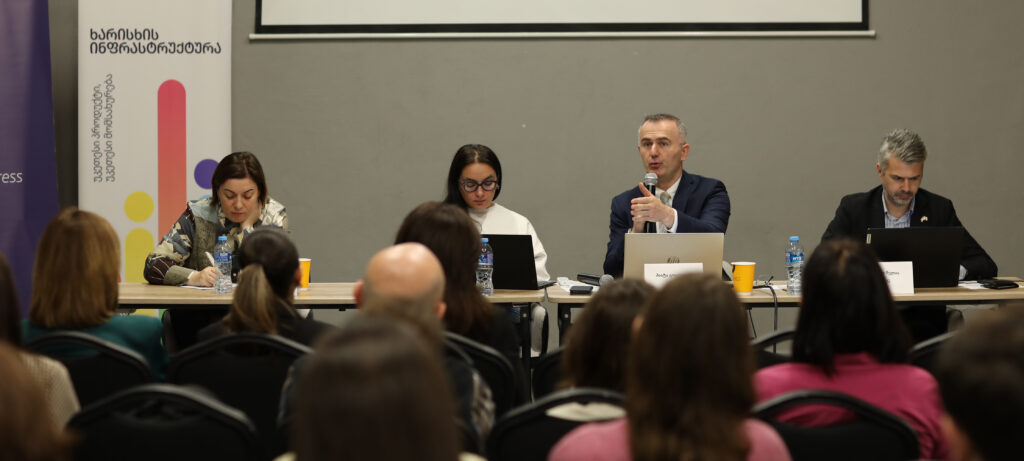
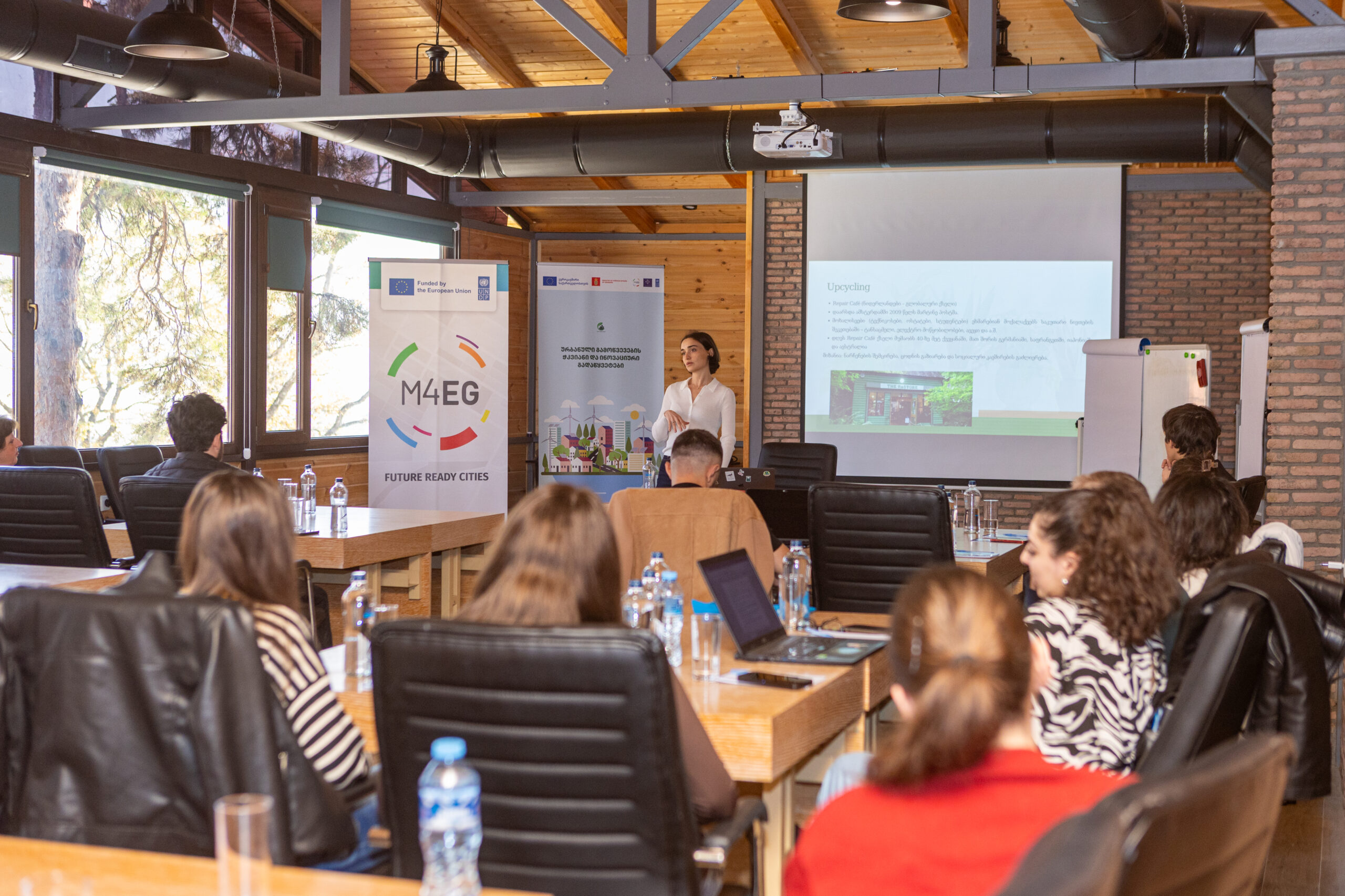
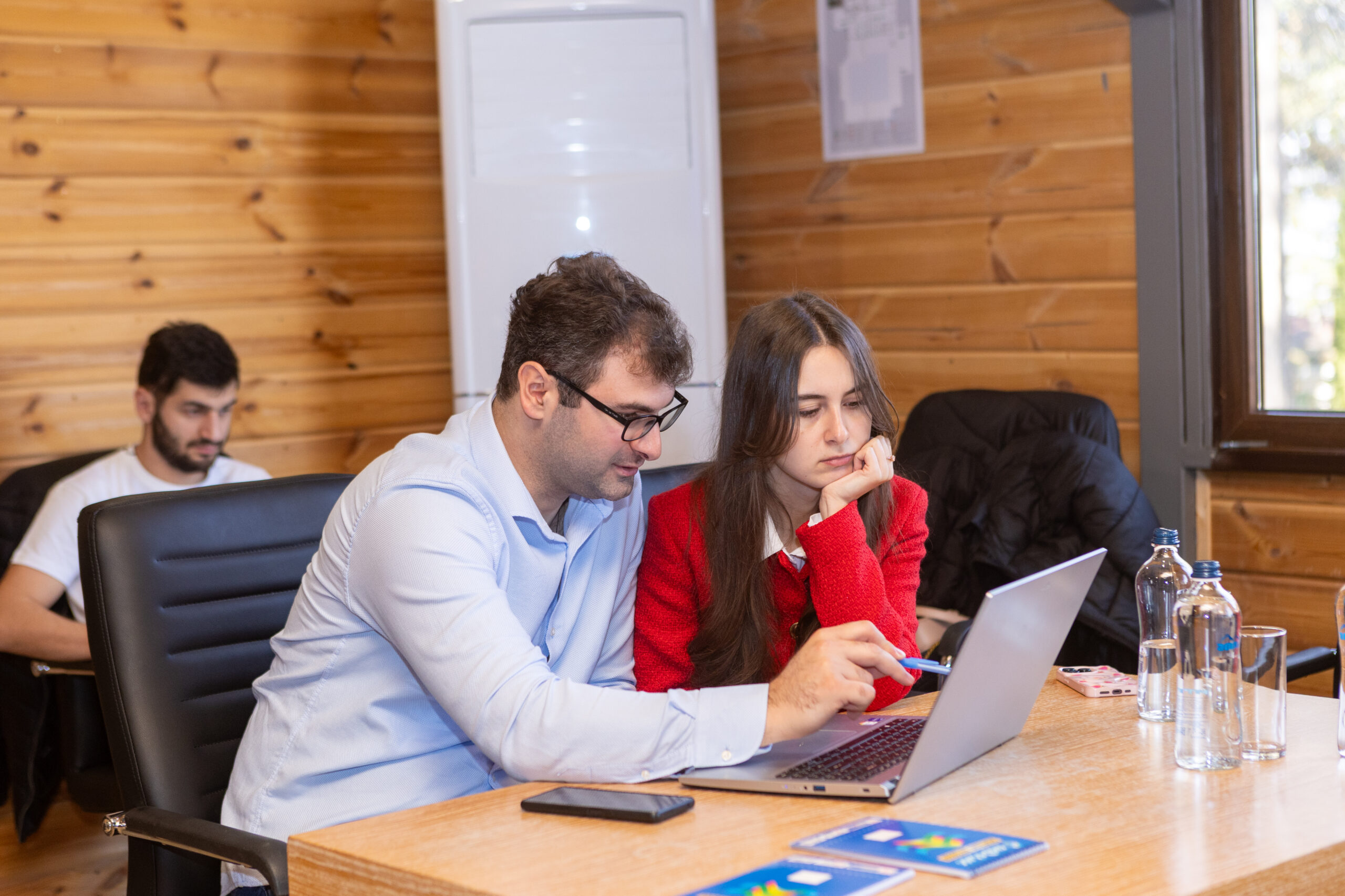
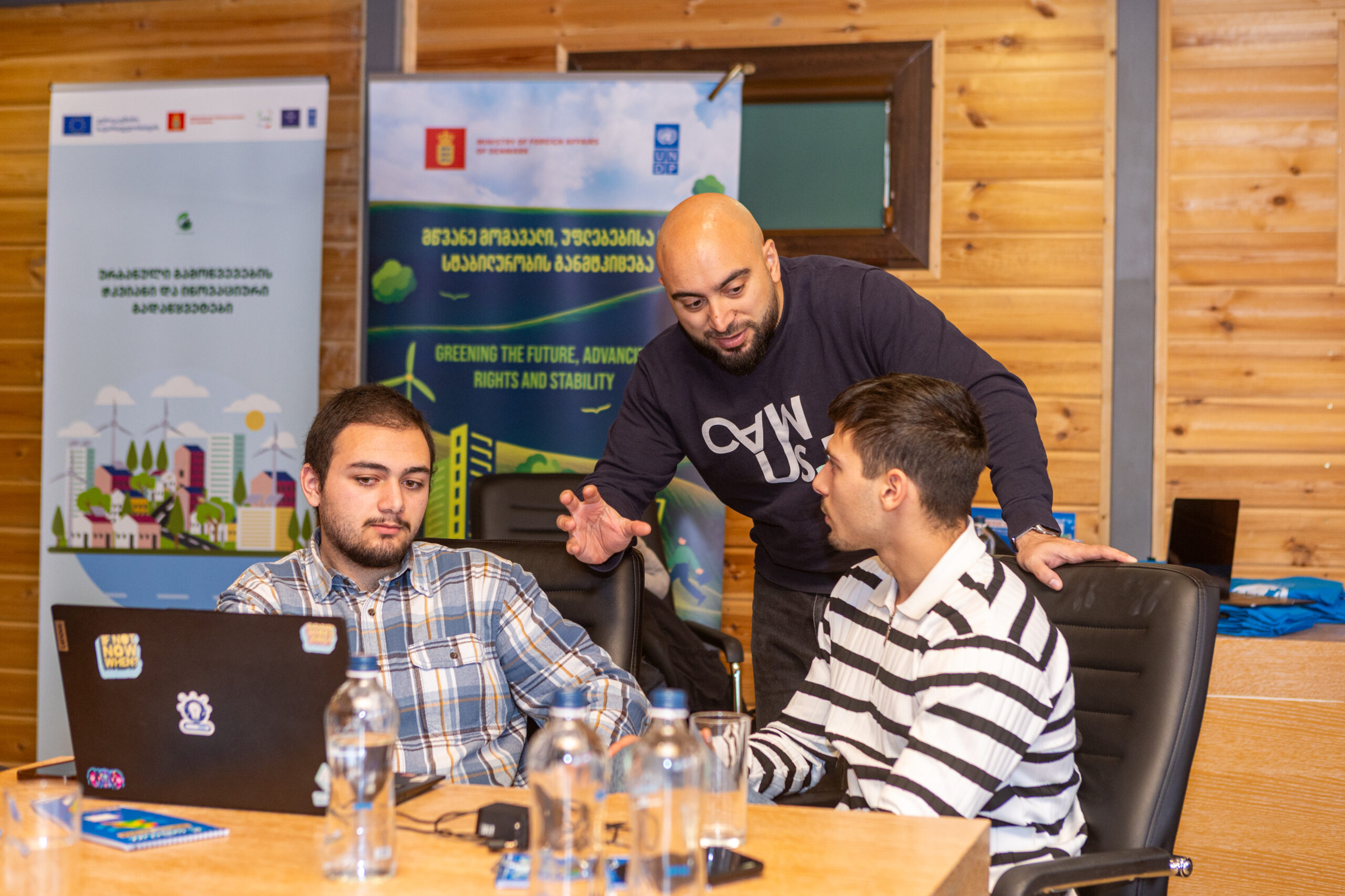
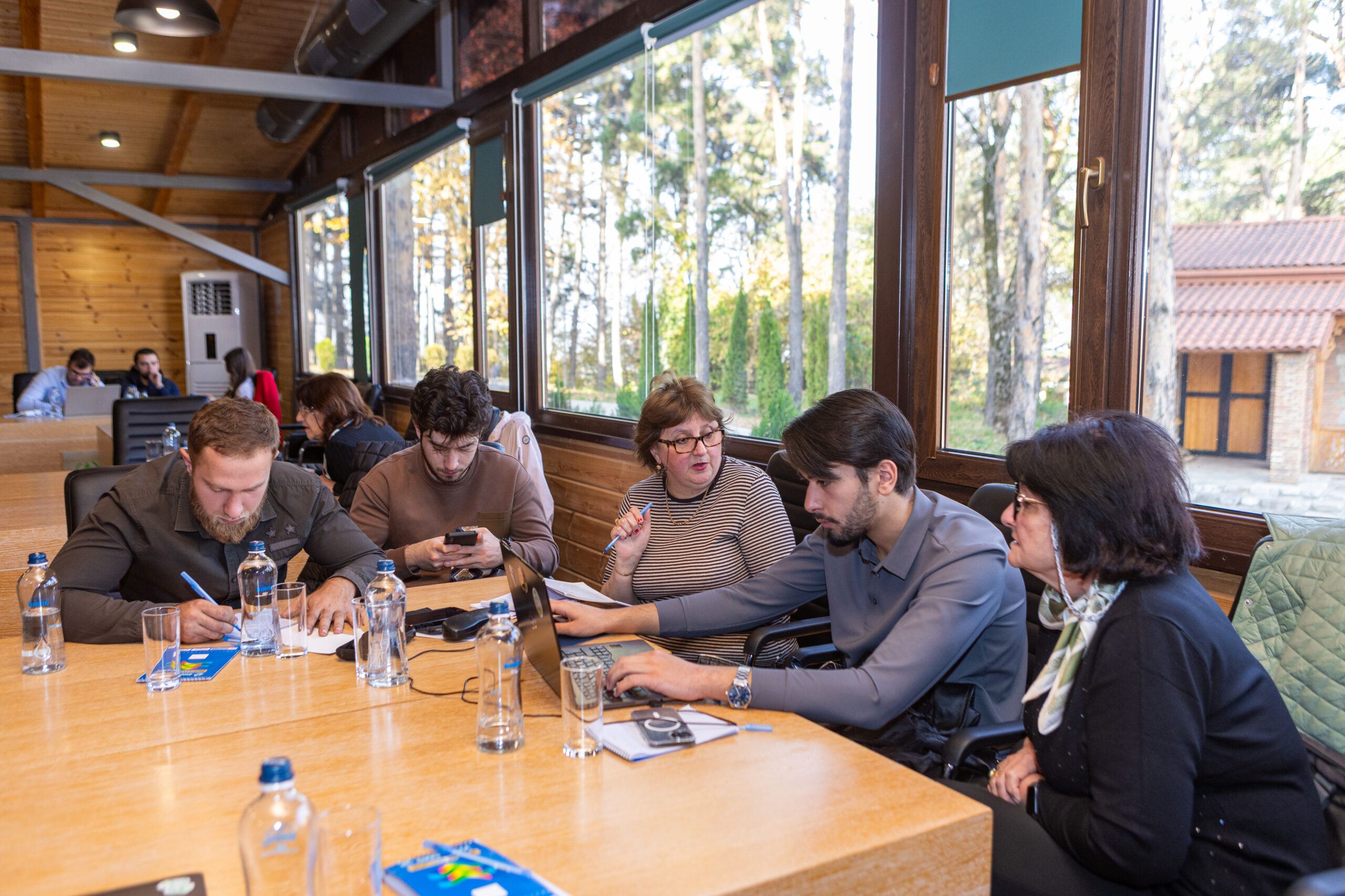
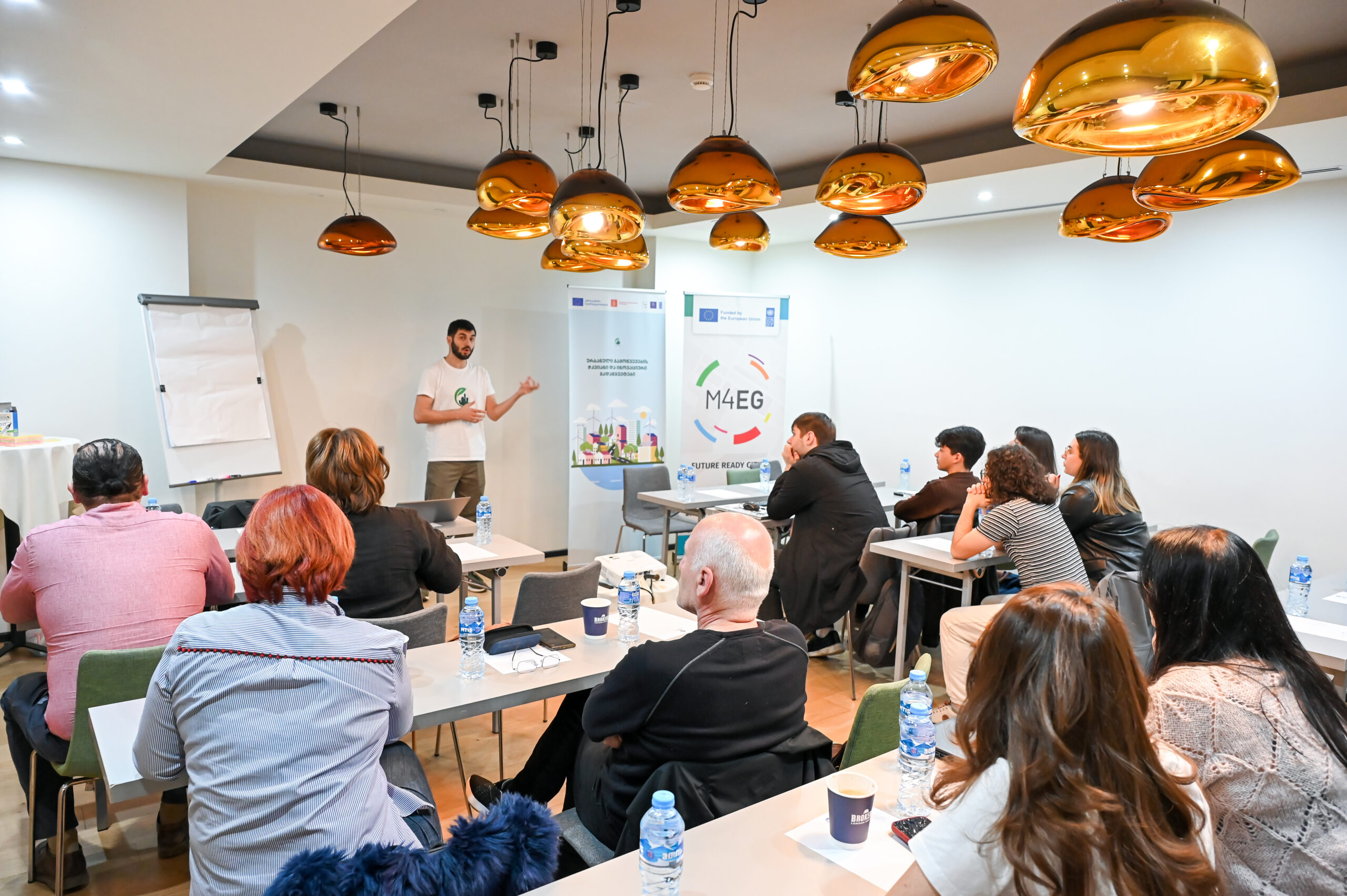
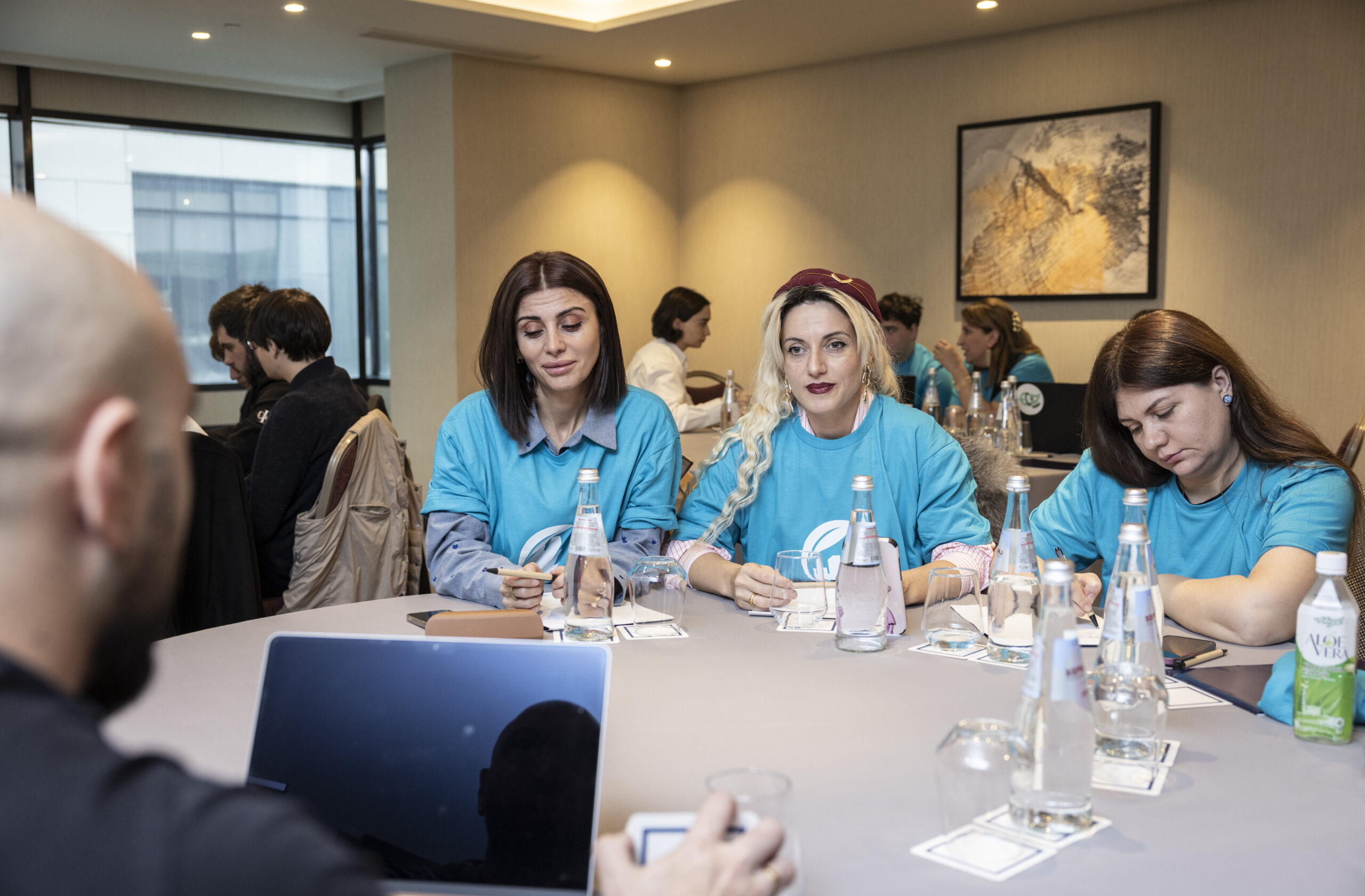
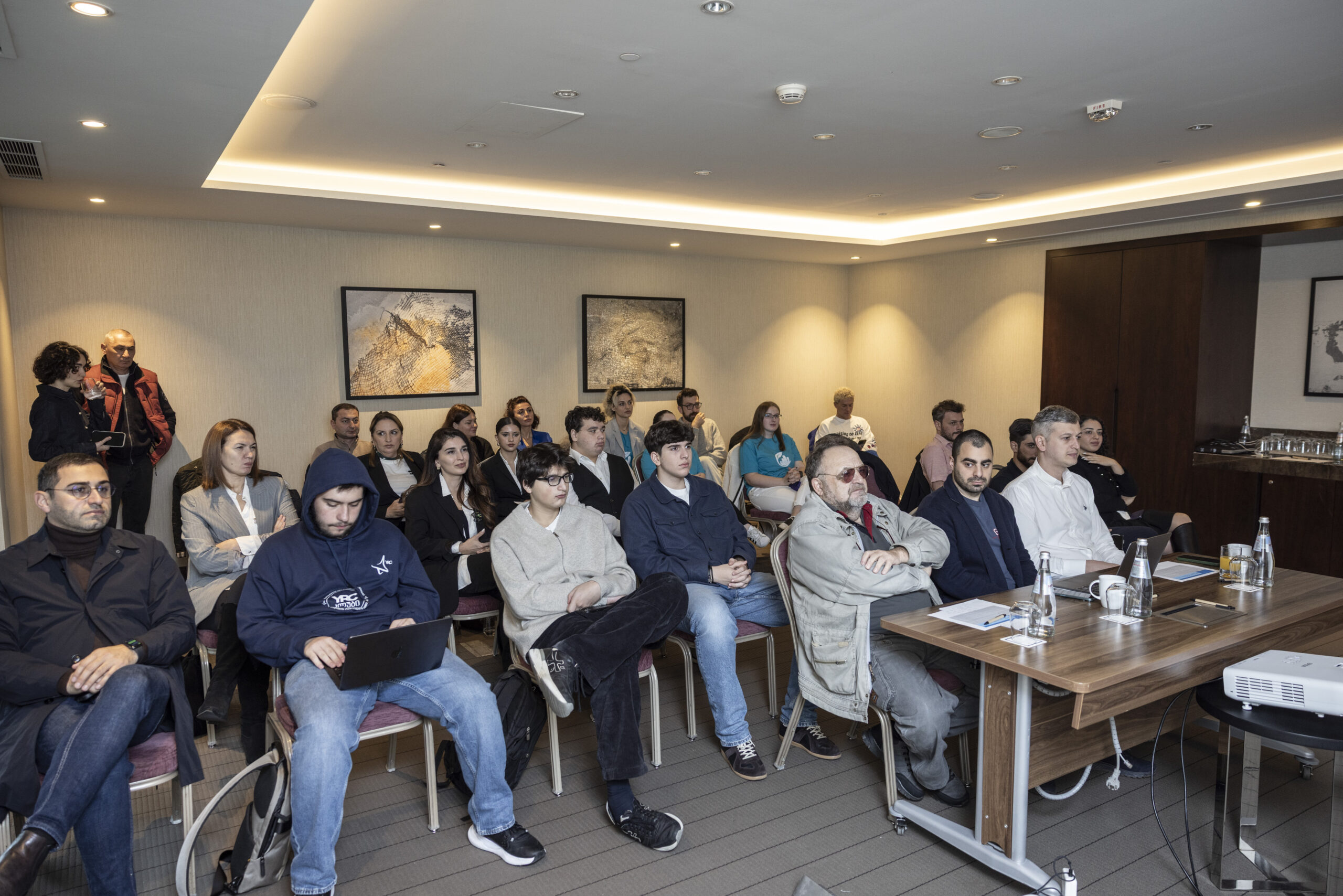
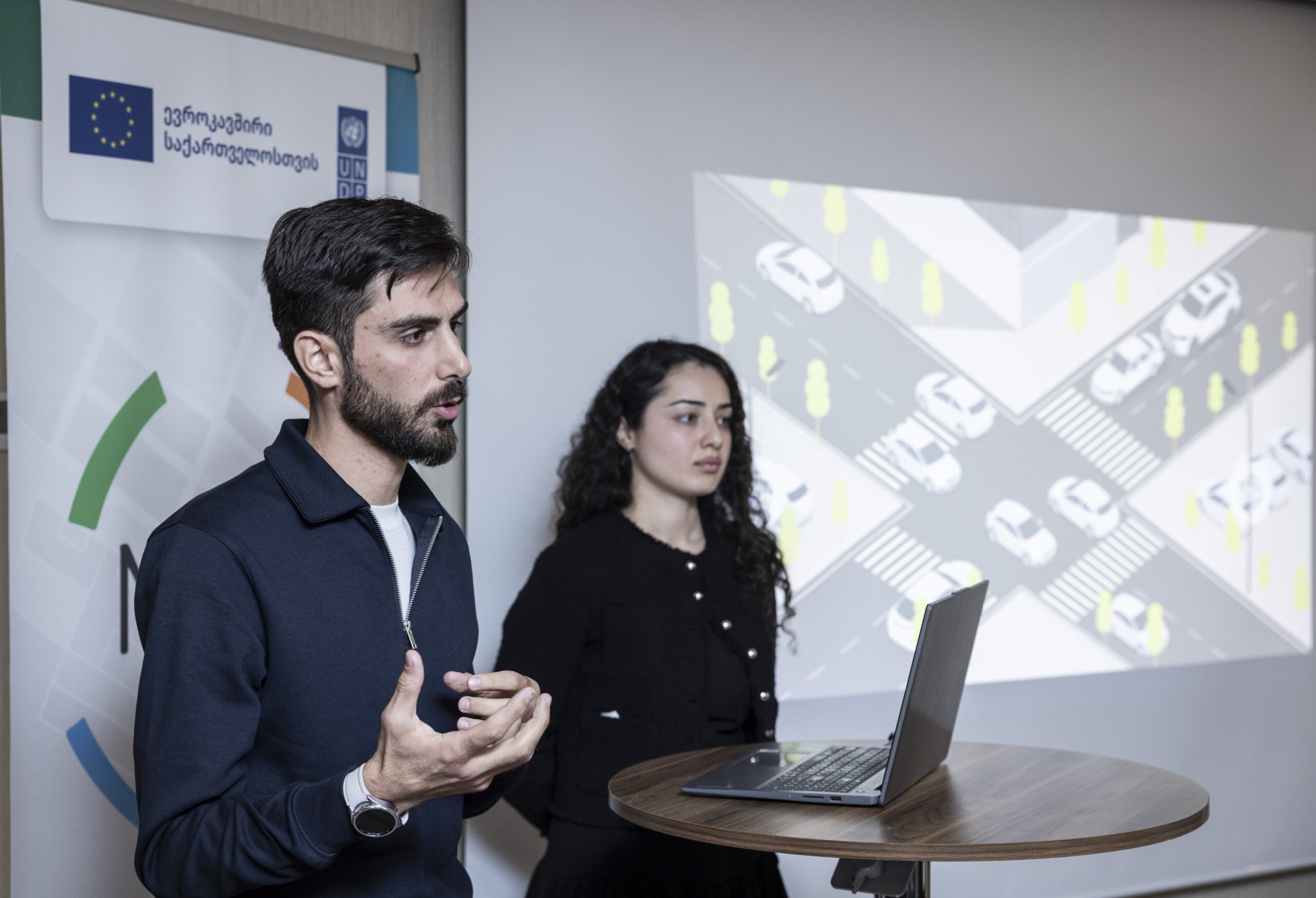
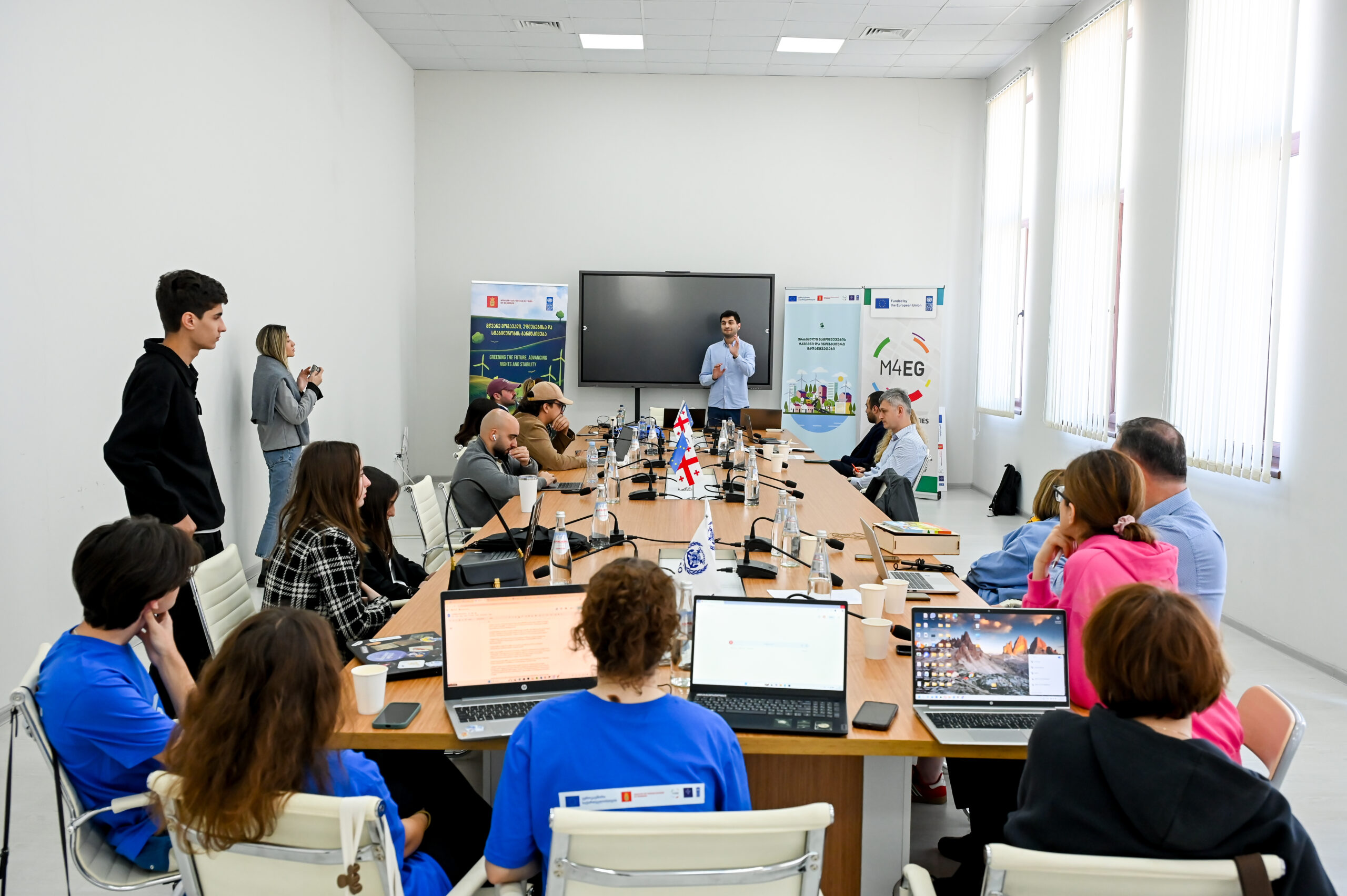
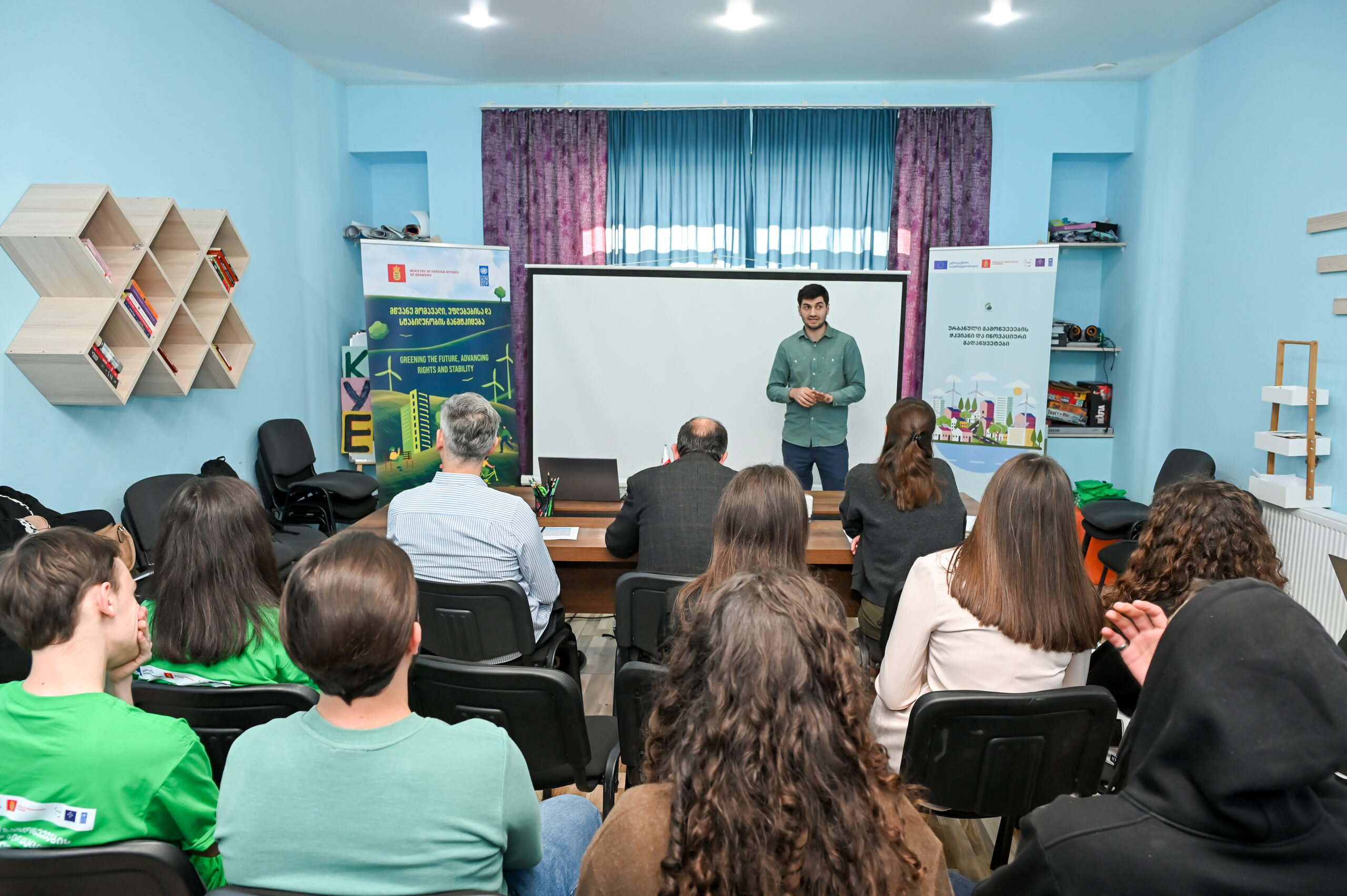
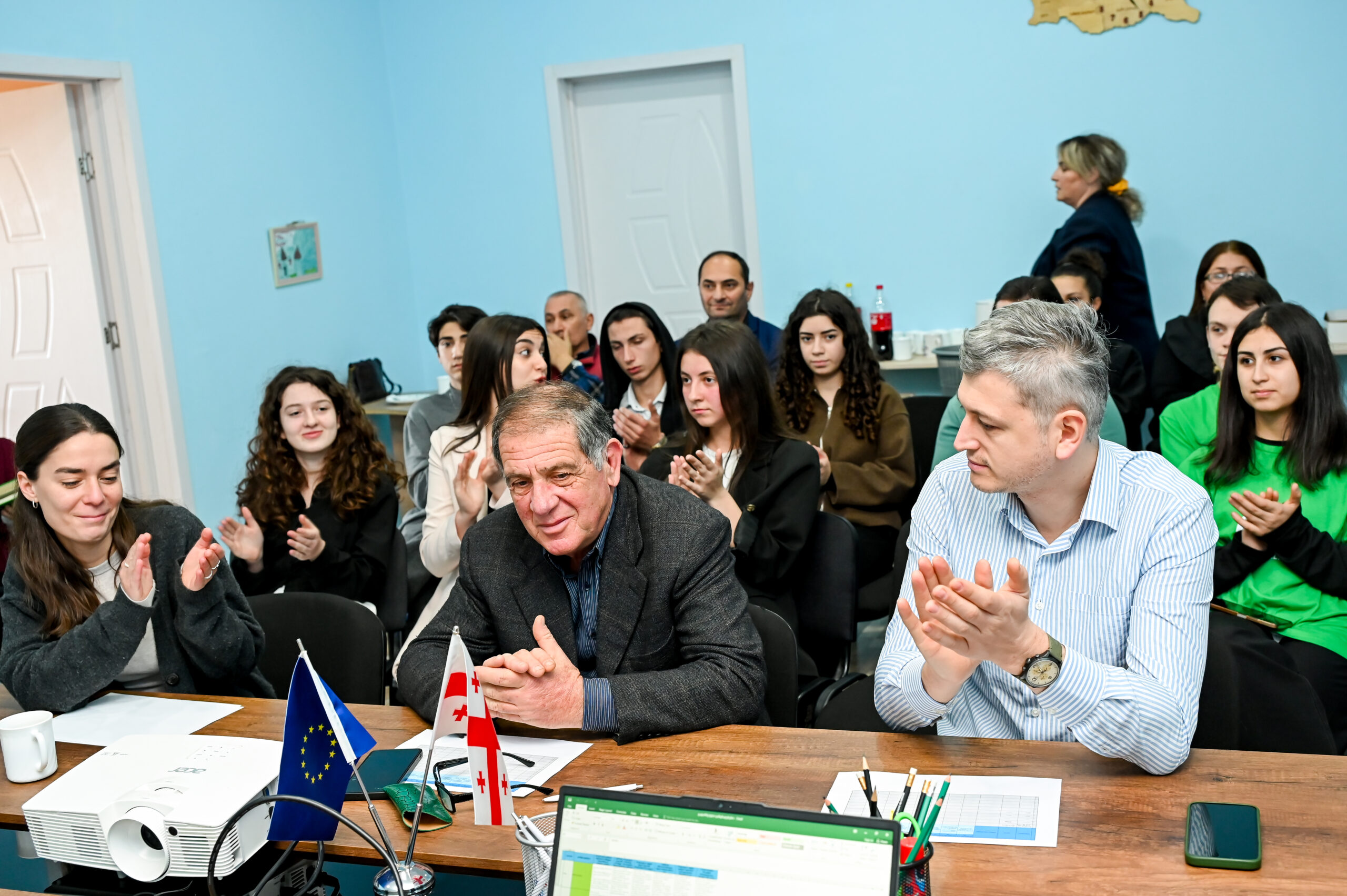
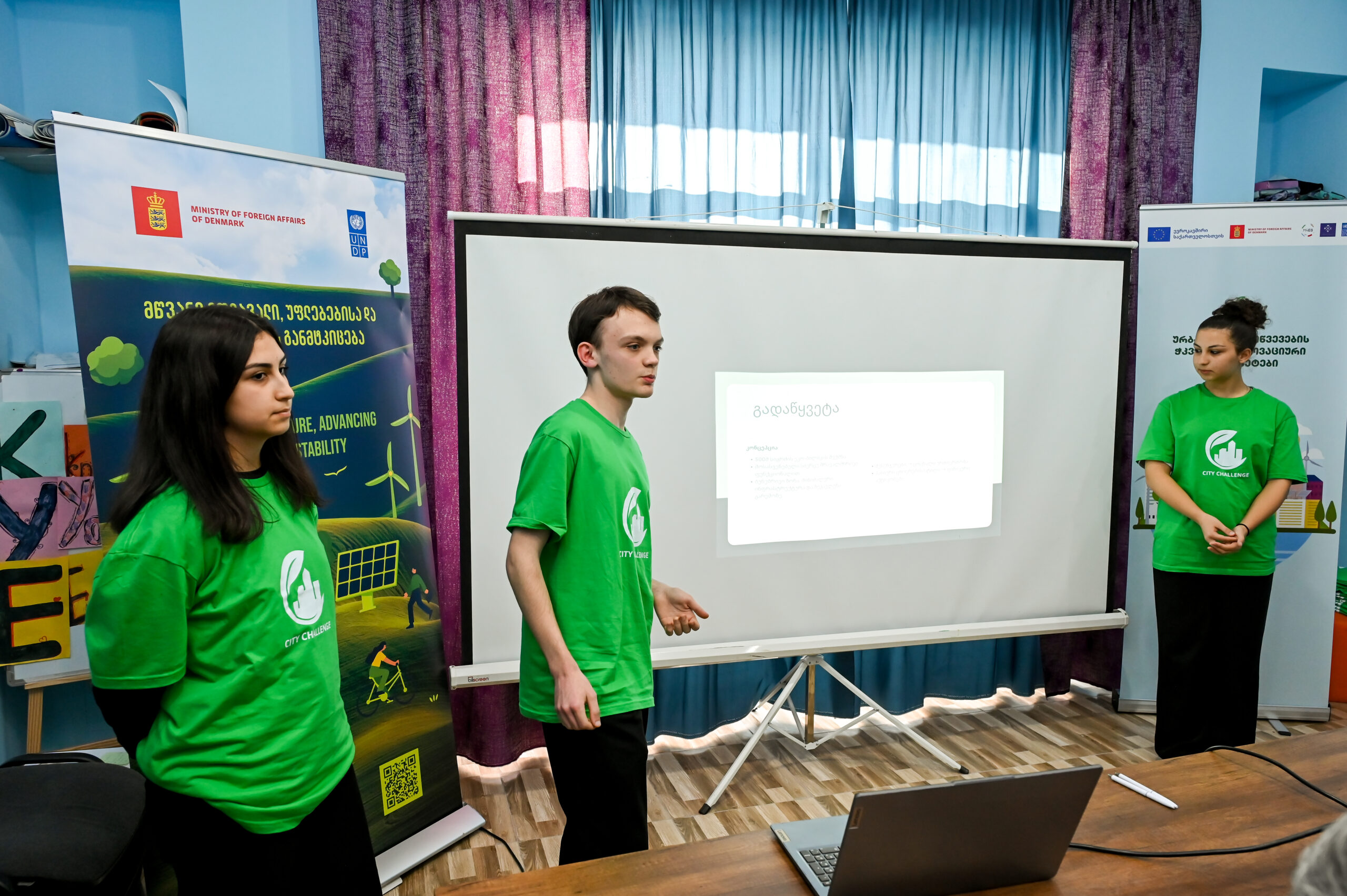
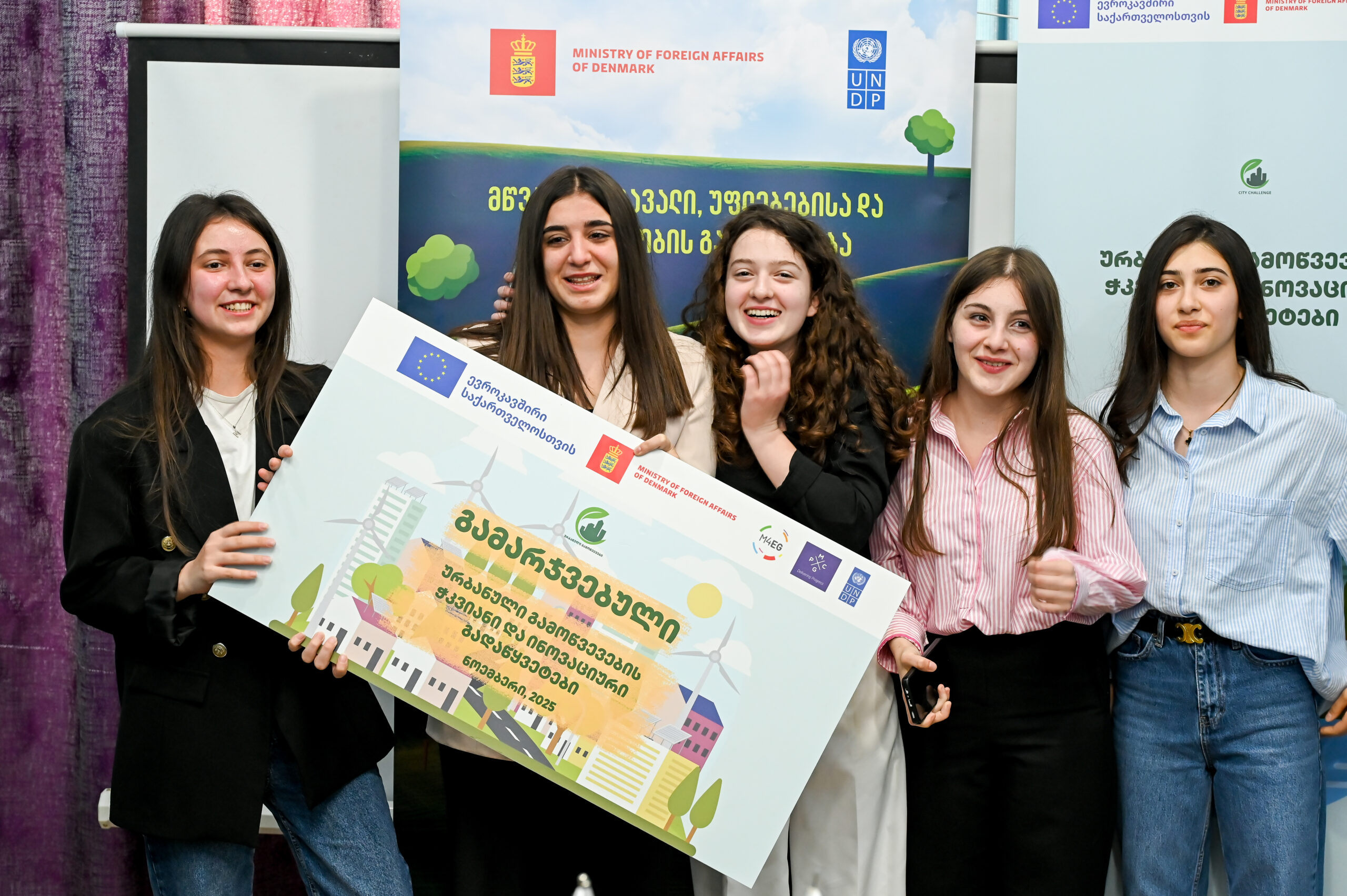
Out of more than 84 applicants, 25 ideas were shortlisted. During the two-day innovation workshops, participants received guidance on refining concepts, integrating environmental components, and preparing their pitches. On the second day, teams presented their ideas to an independent jury composed of experts from the startup ecosystem and environmental sector, showcasing solutions that were both feasible and community oriented.
As the jury member Sandro Chubinidze noted after one of the sessions:
“This project is extremely important for cities. The diversity of ideas was inspiring, and I was especially delighted by the strong involvement of young people. These five cities truly have entrepreneurial spirit — you can feel it in the ideas their citizens presented.”
Cities Taking Action: Selected Green and Smart Initiatives Winning Ideas From Across Five Georgian Cities
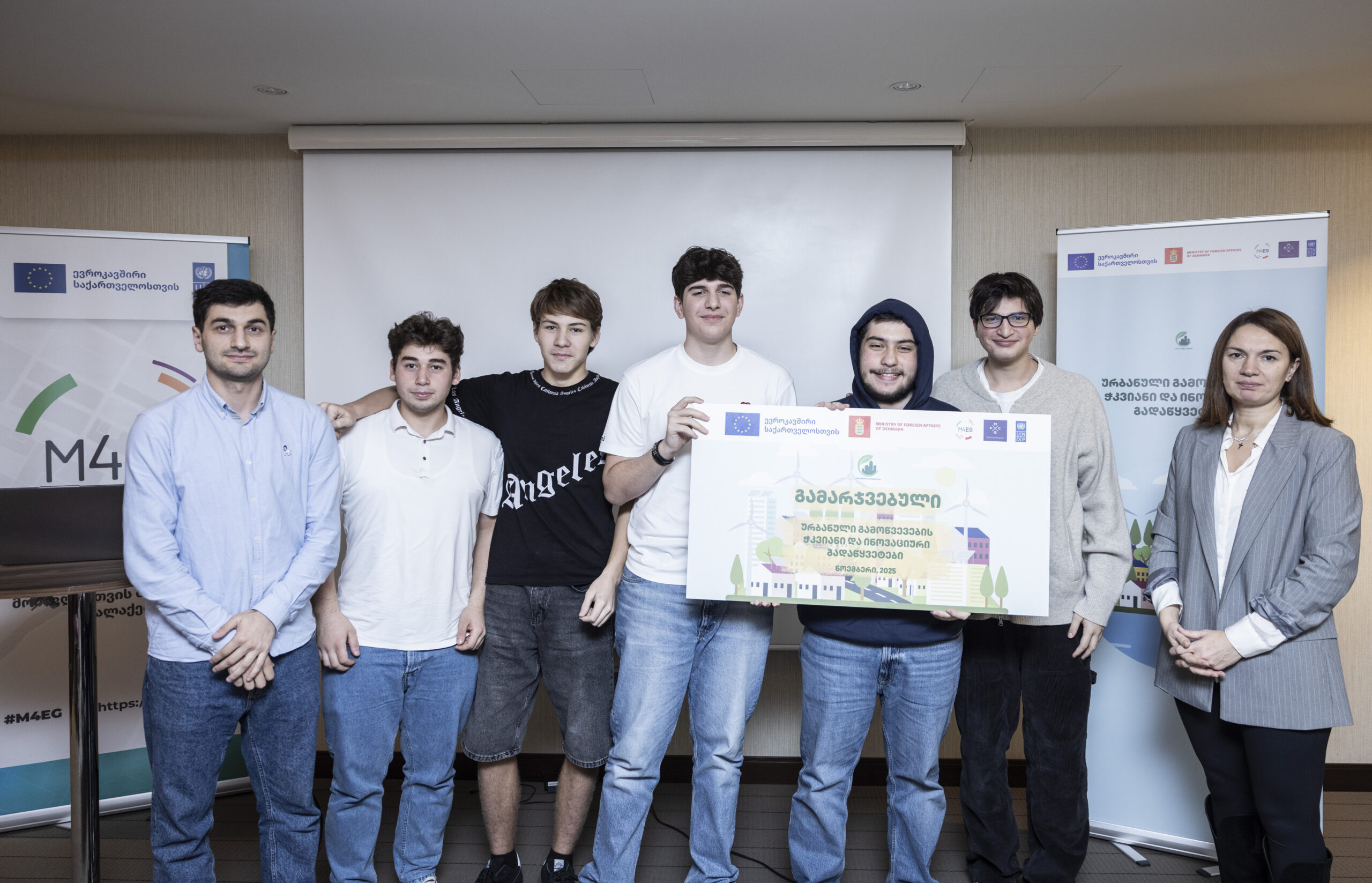
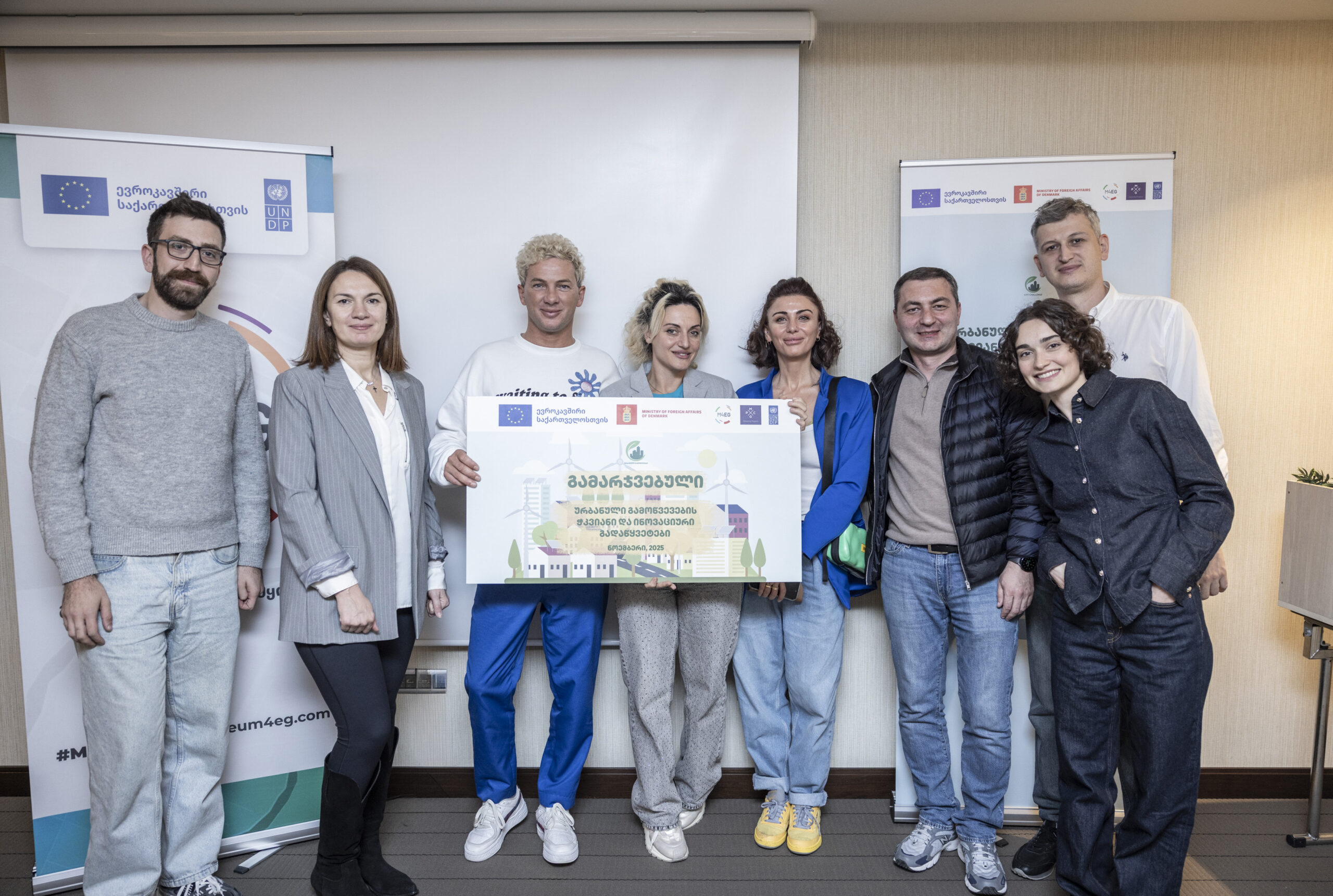
The City Challenges showcased the creativity and commitment of students, teachers, activists, and young innovators in addressing local challenges. From innovative approaches to energy efficiency and waste management, to projects fostering environmental awareness and community engagement, the selected initiatives demonstrate practical solutions that respond directly to each city’s needs.
Telavi
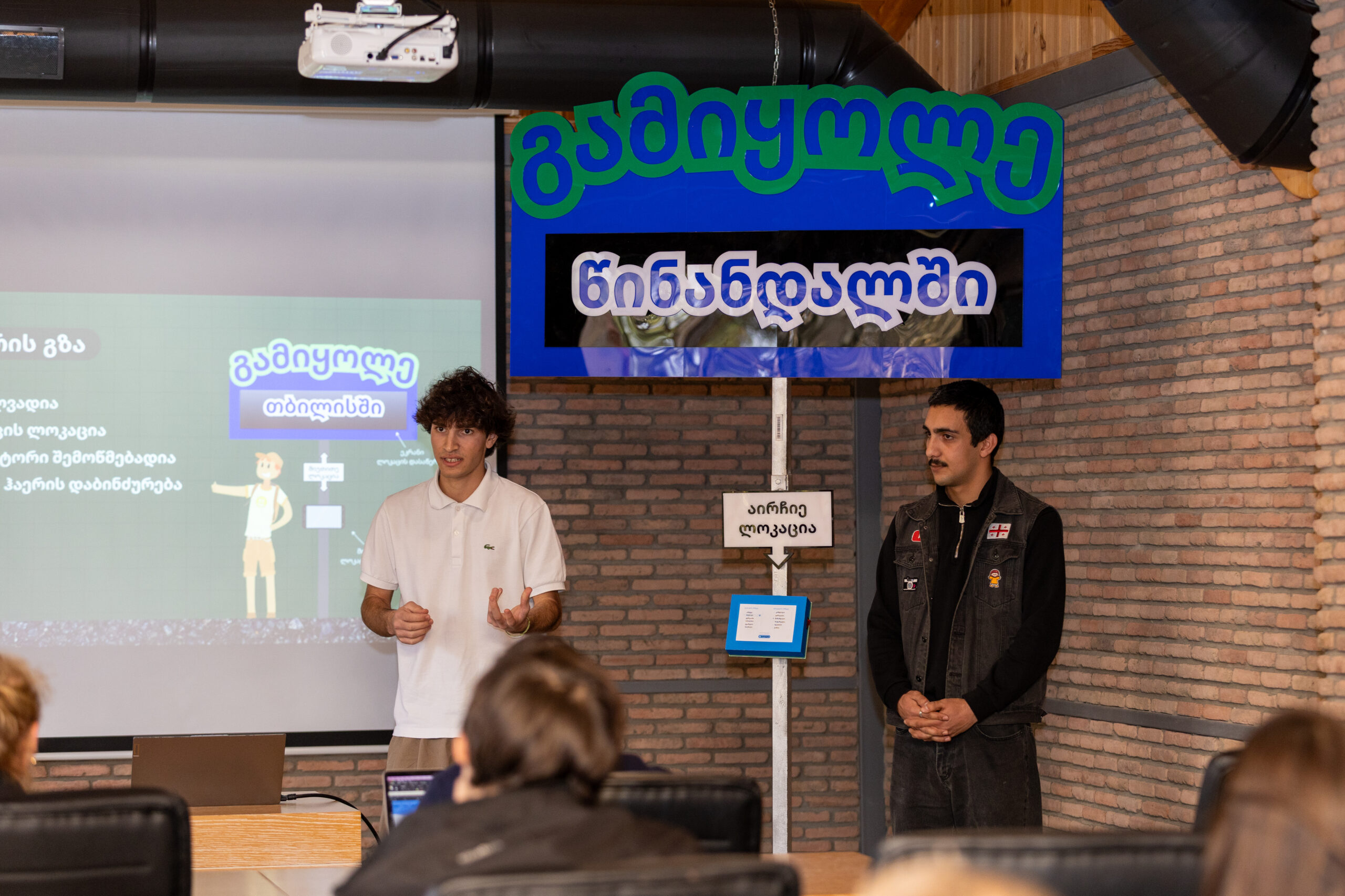
Eco-Path: An interactive, digital educational route in central Telavi, equipped with eco-learning installations to support environmental awareness and eco-tourism.
Living Stream: Solar-powered early warning devices to help communities better anticipate environmental risks.
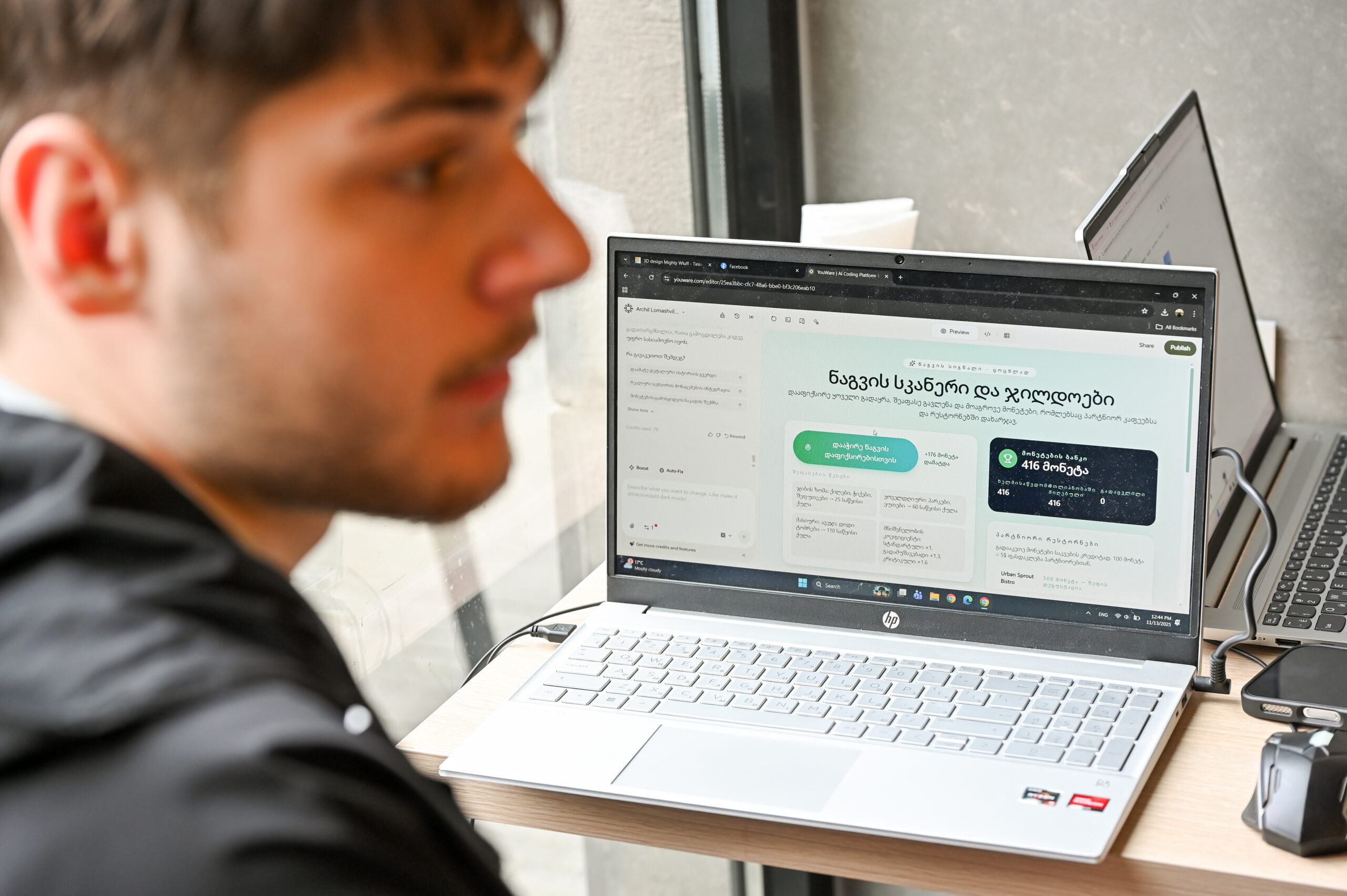
Ecobox: Waste-paper collection boxes installed in schools, allowing students to collect paper, earn points, and exchange them for eco-vouchers or gifts.
Kakha Sukhitashvili, representing the Eco-Path team, highlighted the long-term vision behind their idea:
“Participating in this competition allowed us to take another step toward Telavi’s sustainable development. The Eco-Path will support the protection of biodiversity, the preservation of cultural heritage, education, and the growth of eco-tourism in our city.”

Kutaisi
Air Quality Awareness Initiative: Installation of an air-monitoring device and implementation of a public information campaign to raise awareness on pollution.
“The project aims to establish a mechanism for monitoring air quality in Kutaisi and to raise citizens’ awareness of how air quality is connected to city planning, transportation, green spaces, and energy efficiency. The initiative highlights Kutaisi’s potential to become a ‘City of Clean Air,’ where development and ecology are equally important.”
Recreational Space at Iberia College: Creation of a solar-powered green recreational area including a green wall, waste-separation points, and an energy-producing bicycle.
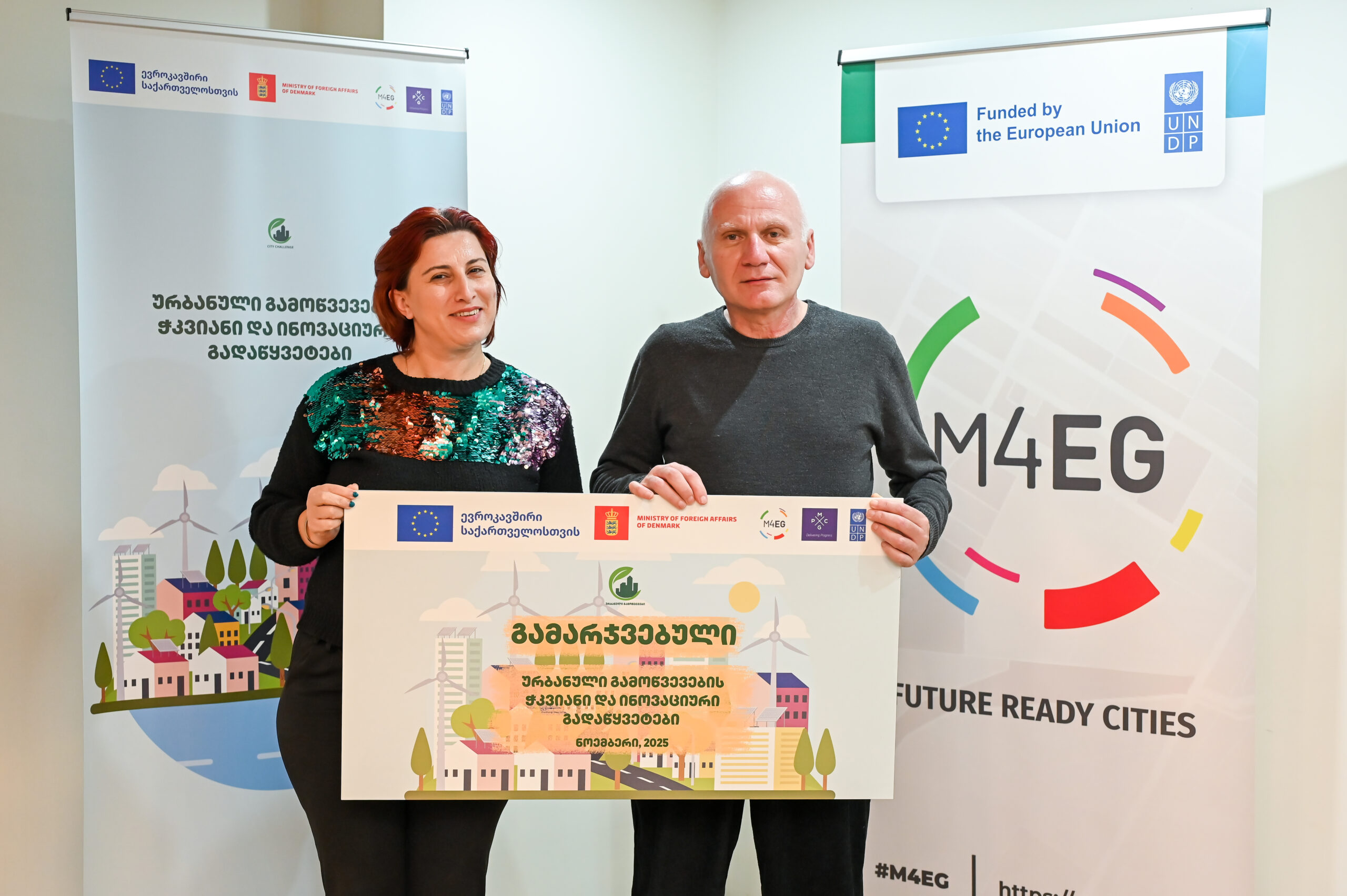
Batumi
“Eco HERO is an innovative environmental education tool, that uses animation to create an emotional, psychological, and behavioral connection with citizens, encouraging them to become agents of change in environmental protection. It raises awareness, provides useful guidance, and enables residents to implement ‘green’ ideas in the city themselves. The winning animation ‘Eco HERO’ is not a one-time episode, it will serve as a dynamic guide for people of all ages, laying the foundation for future episodes, that will continue to engage citizens year after year.” Eco HERO team.
Eco Hero: Production of animated content and engagement activities to promote eco awareness among children and teenagers.
Eco Steps: Installation of energy-generating tiles, that convert footsteps into electricity for small urban features.
Eco Space: An eco-lab at the #16 Public School and establishment of a citywide network of eco-clubs.
Poti
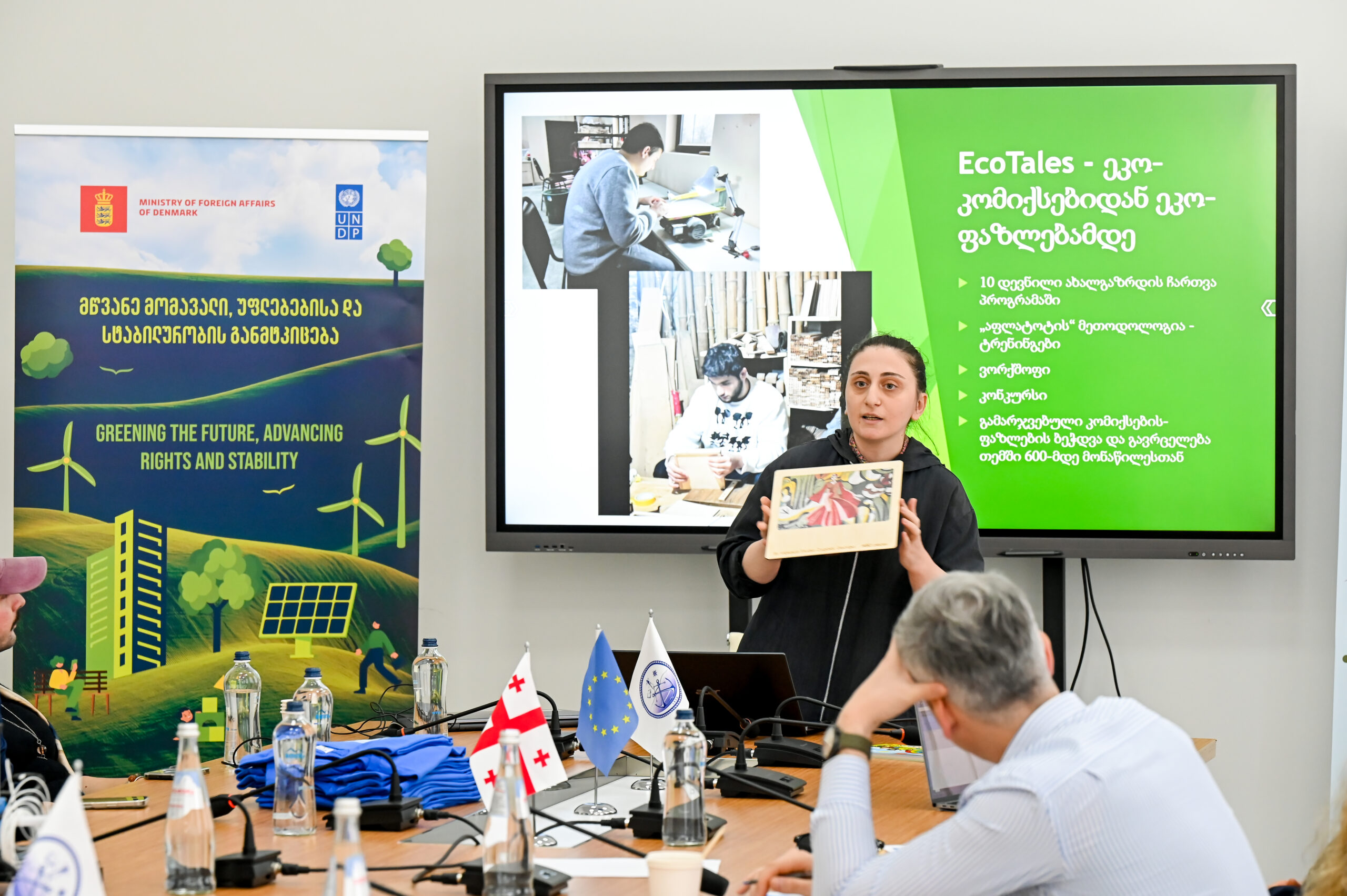
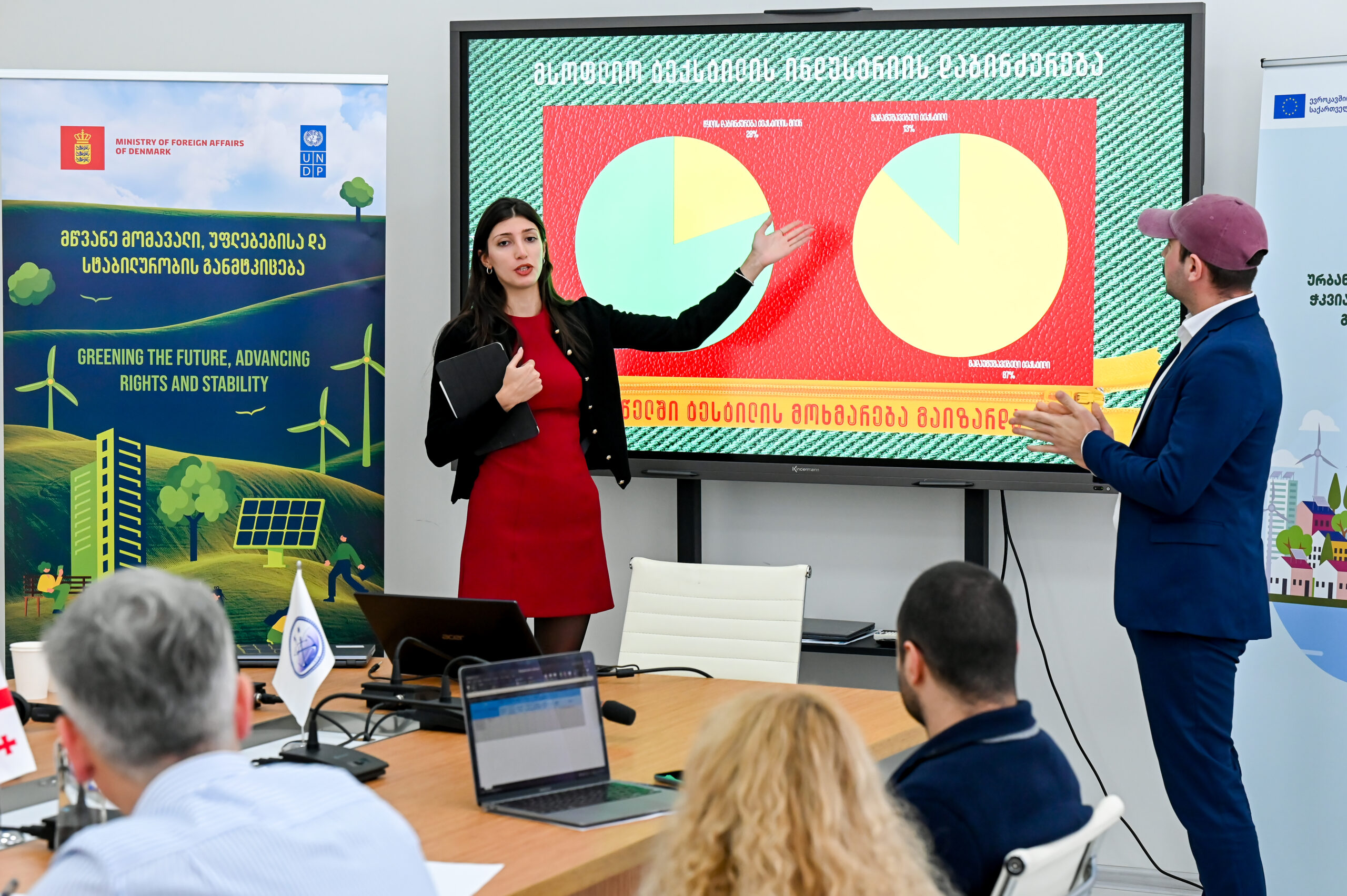
Ariadne: A textile recycling initiative, that transforms discarded materials into new products and raises community awareness through social workshops.
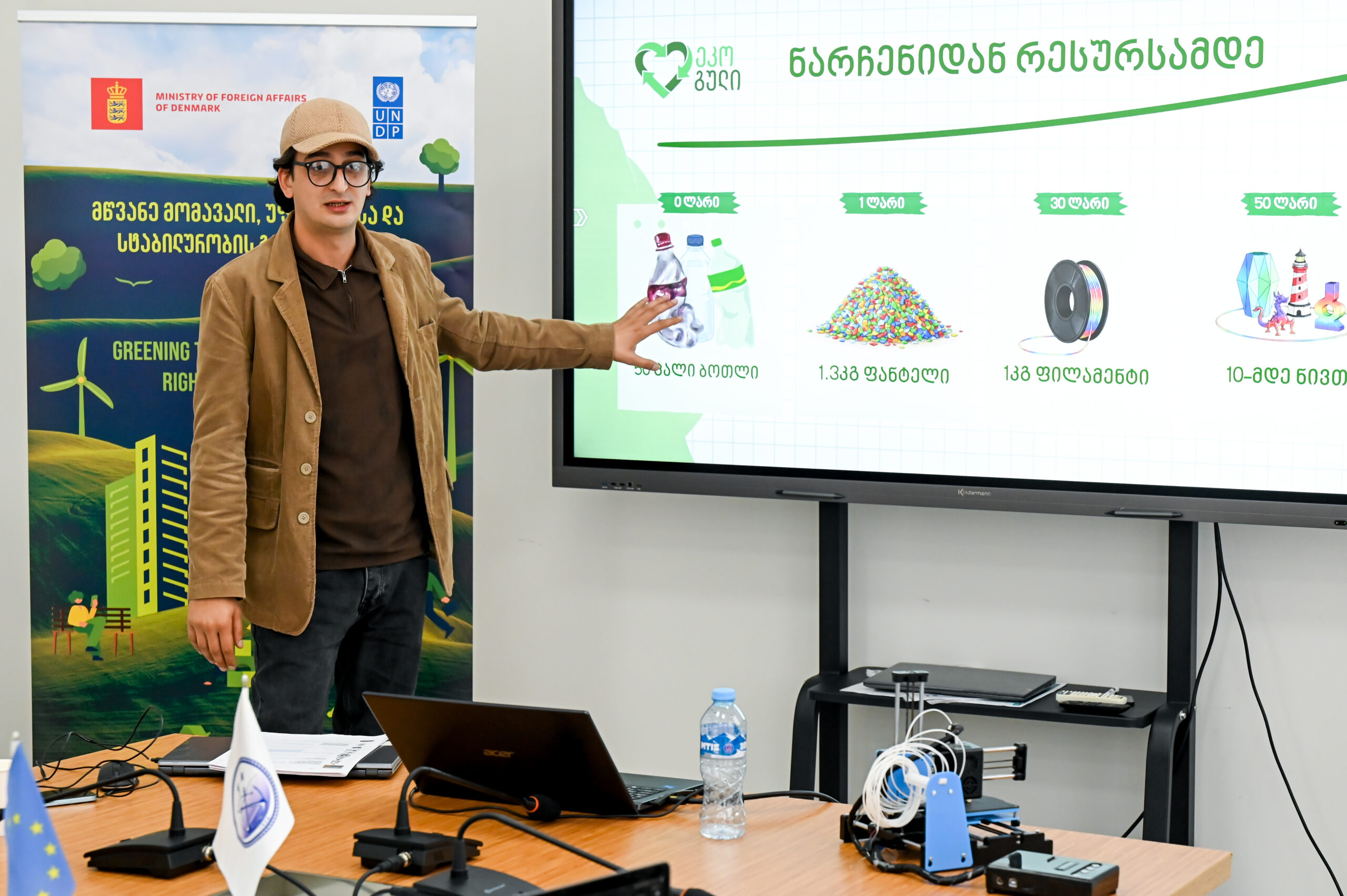
Eco-Guli: Production of 3D printing filament and other products from recycled waste, supported by a network of school eco-clubs.
“Eco-Guli has three main goals in Poti: to teach children about the circulation of plastic waste, to strengthen their skills in working with modern technologies, and, together with volunteers, to beautify the city and the Black Sea coast. It also aims to increase social responsibility and to instill the idea that ‘what is waste for some can be a resource for others.’ Using 3D printing technology and collected plastic, Eco-Guli will help students apply their creative, artistic, and innovative skills while contributing to effective waste recycling in the city.” Eco-Guli team.
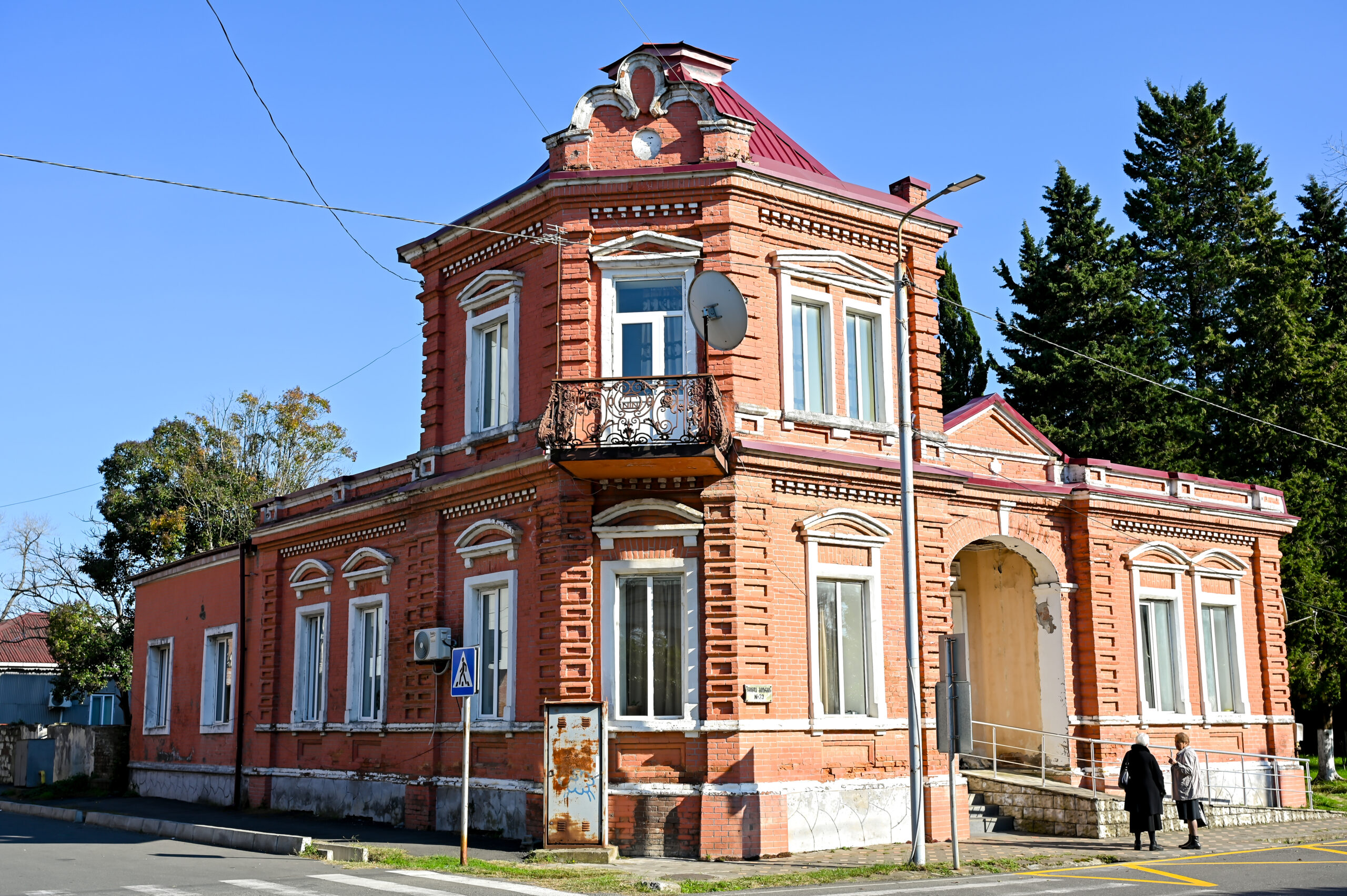
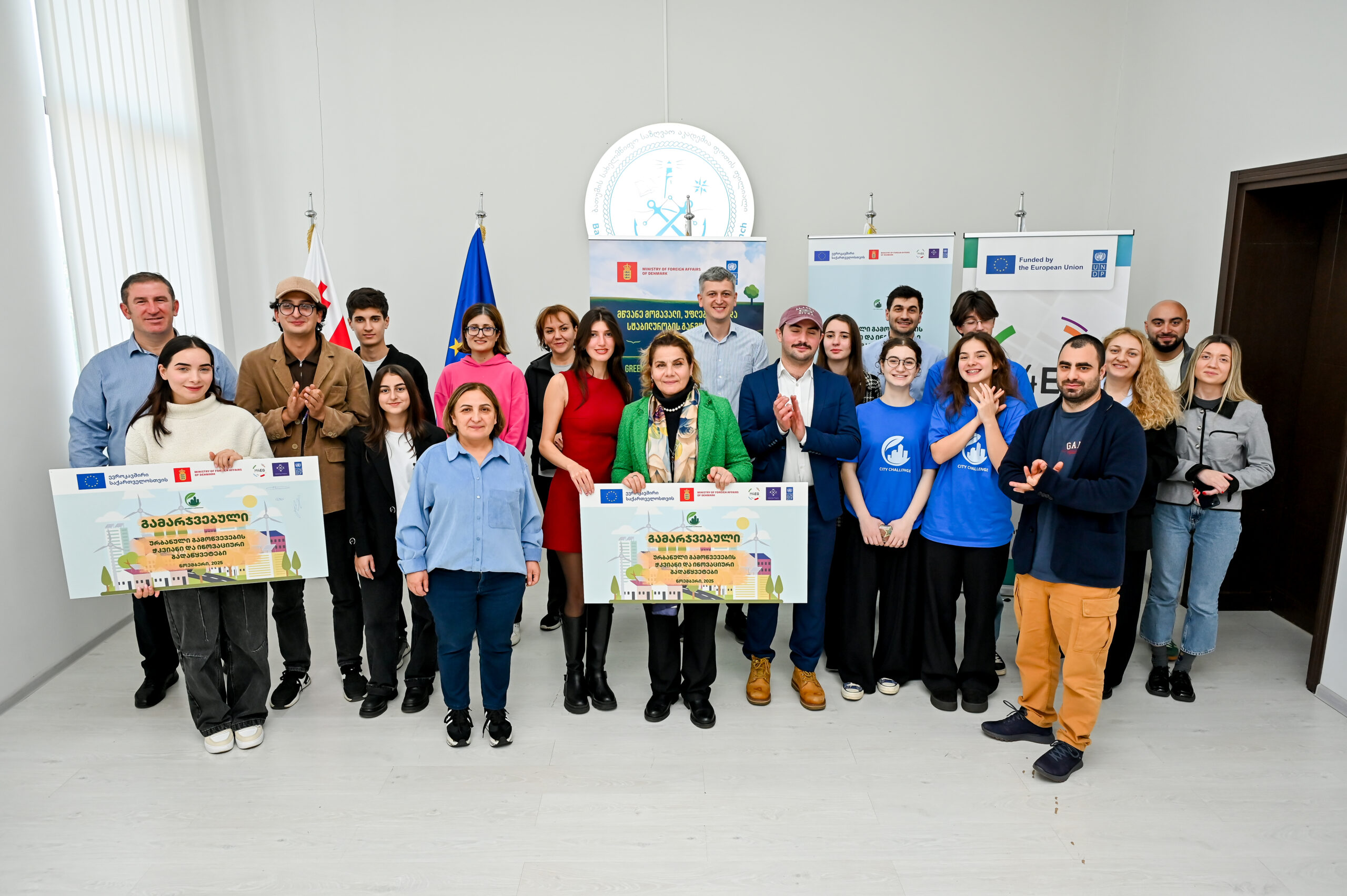
Khobi:
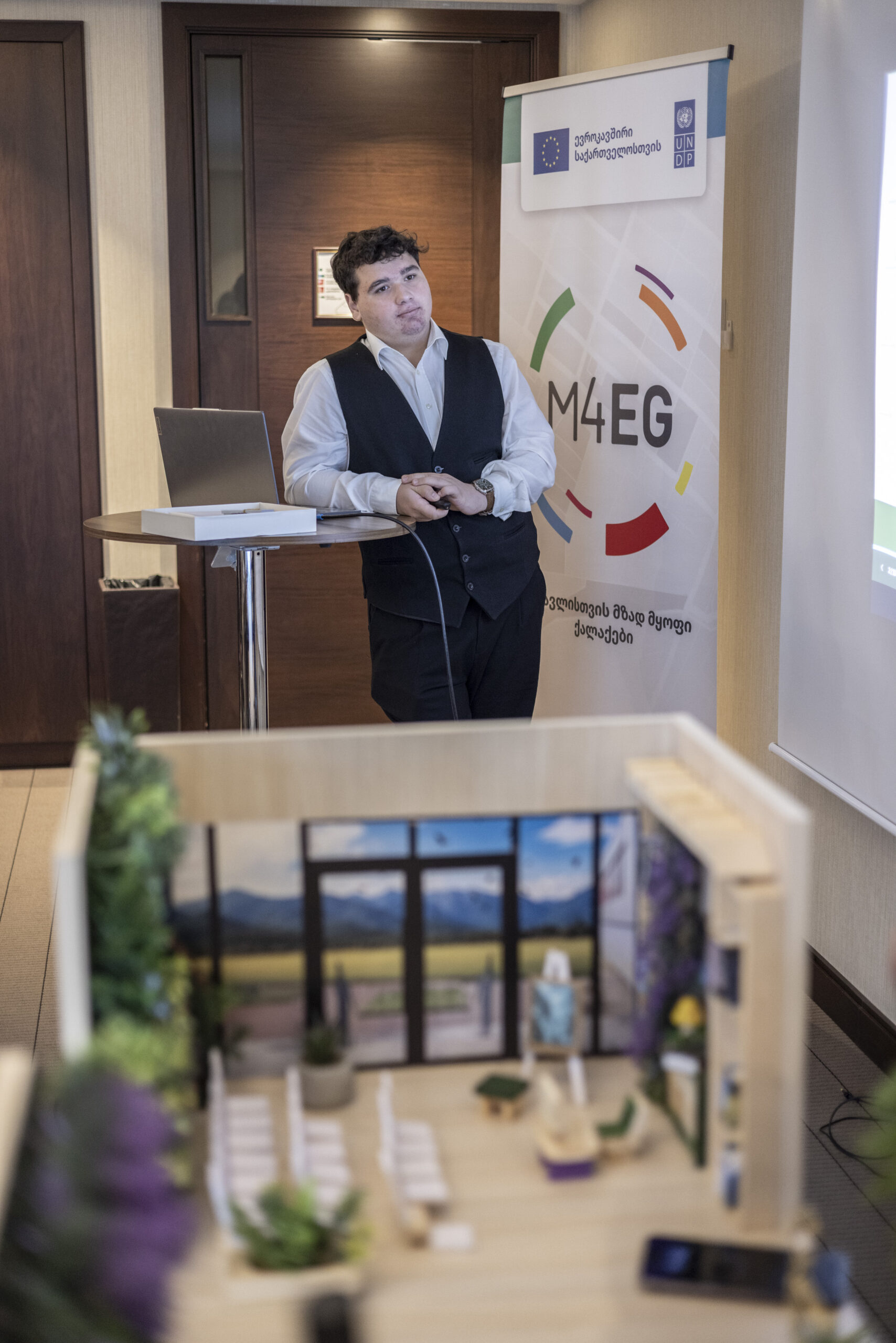
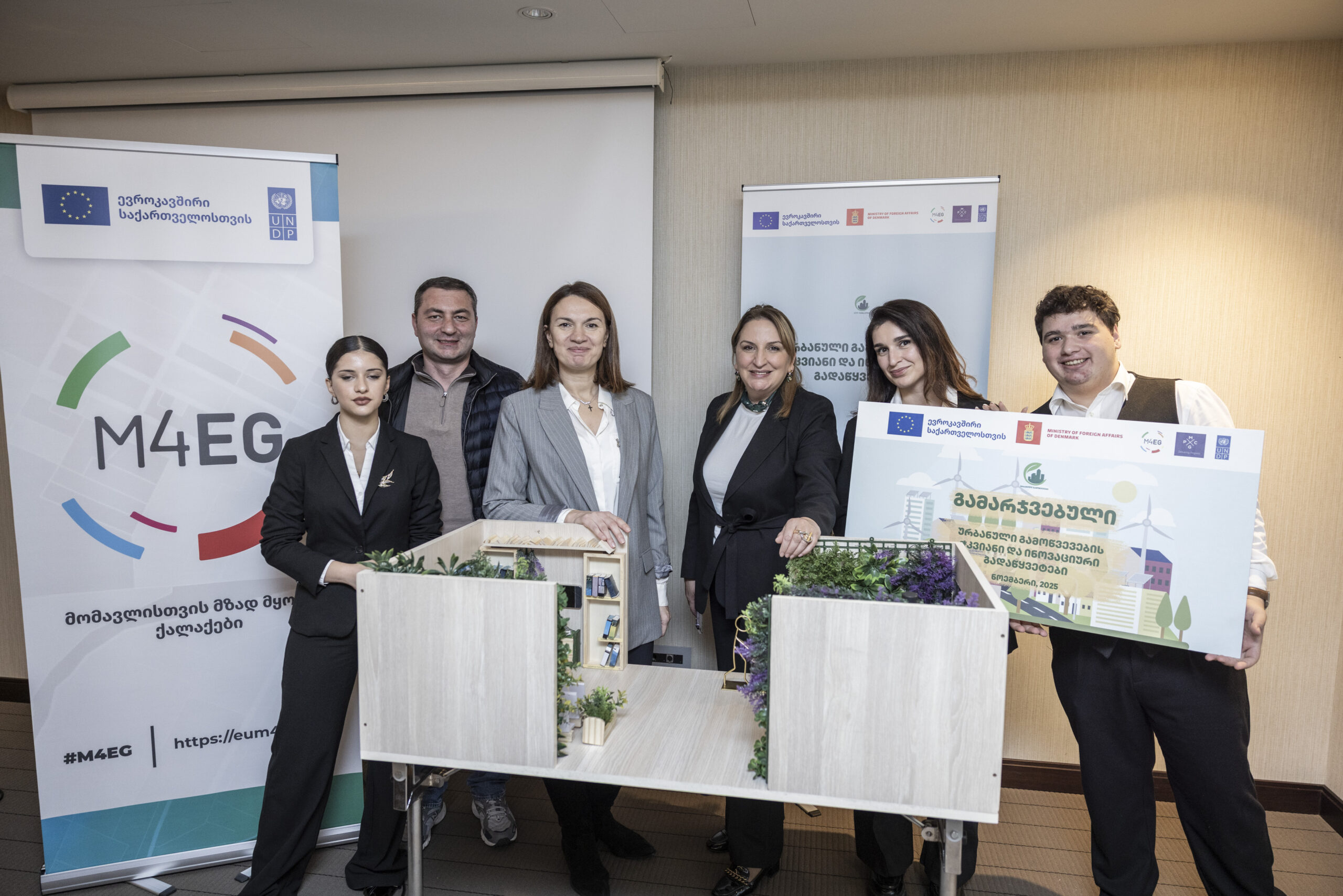
Eco-Educational Space at Kheti Public School: A solar-powered educational eco-hub, fully designed and led by students, providing a learning platform for environmental, energy, and sustainability topics.
“In the Eco-Educational Space at Kheti Public School, students will learn about environmental topics, participate in trainings, and engage in ecological games. Instead of spending time scrolling on phones, they will be able to recharge while accessing information they might not have had before. This space will serve as a meeting and learning area for both students and the wider community, supporting informal environmental education and sustainable practices. The initiative will benefit not only the students of Kheti but also the youth across Khobi, as the local municipality will collaborate with other schools to actively enhance the space.”
From Ideas to Real Prototypes
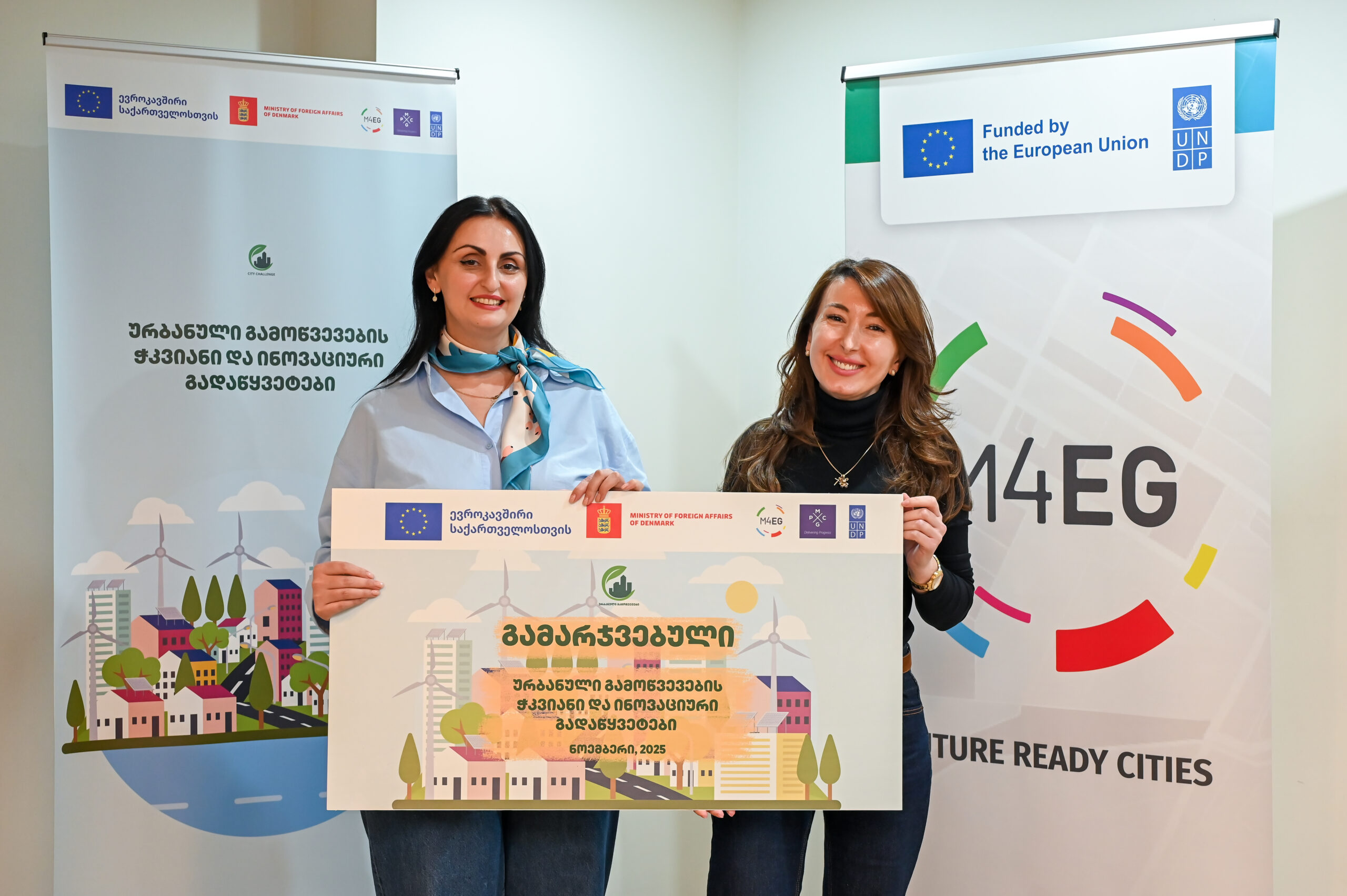
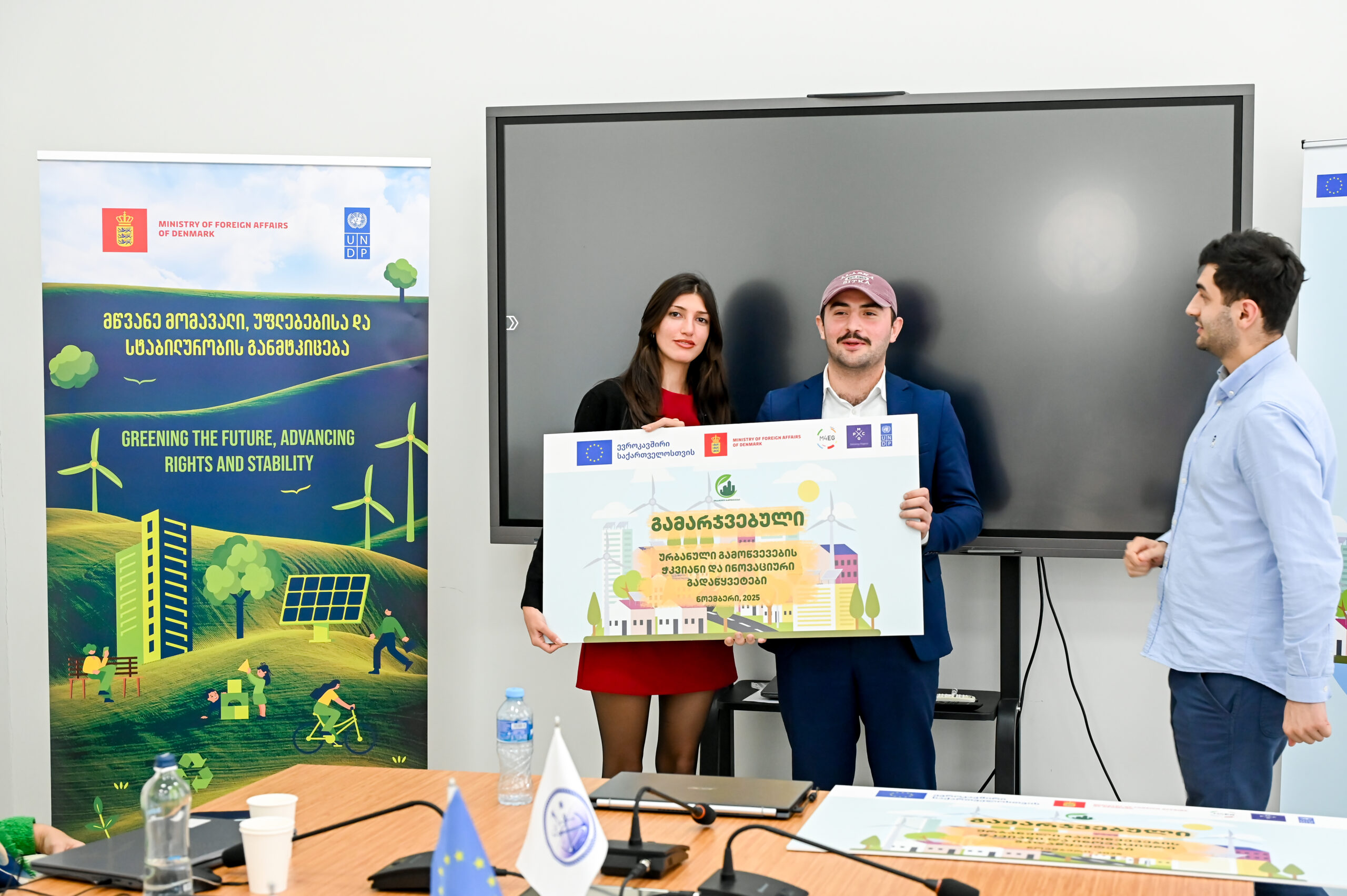
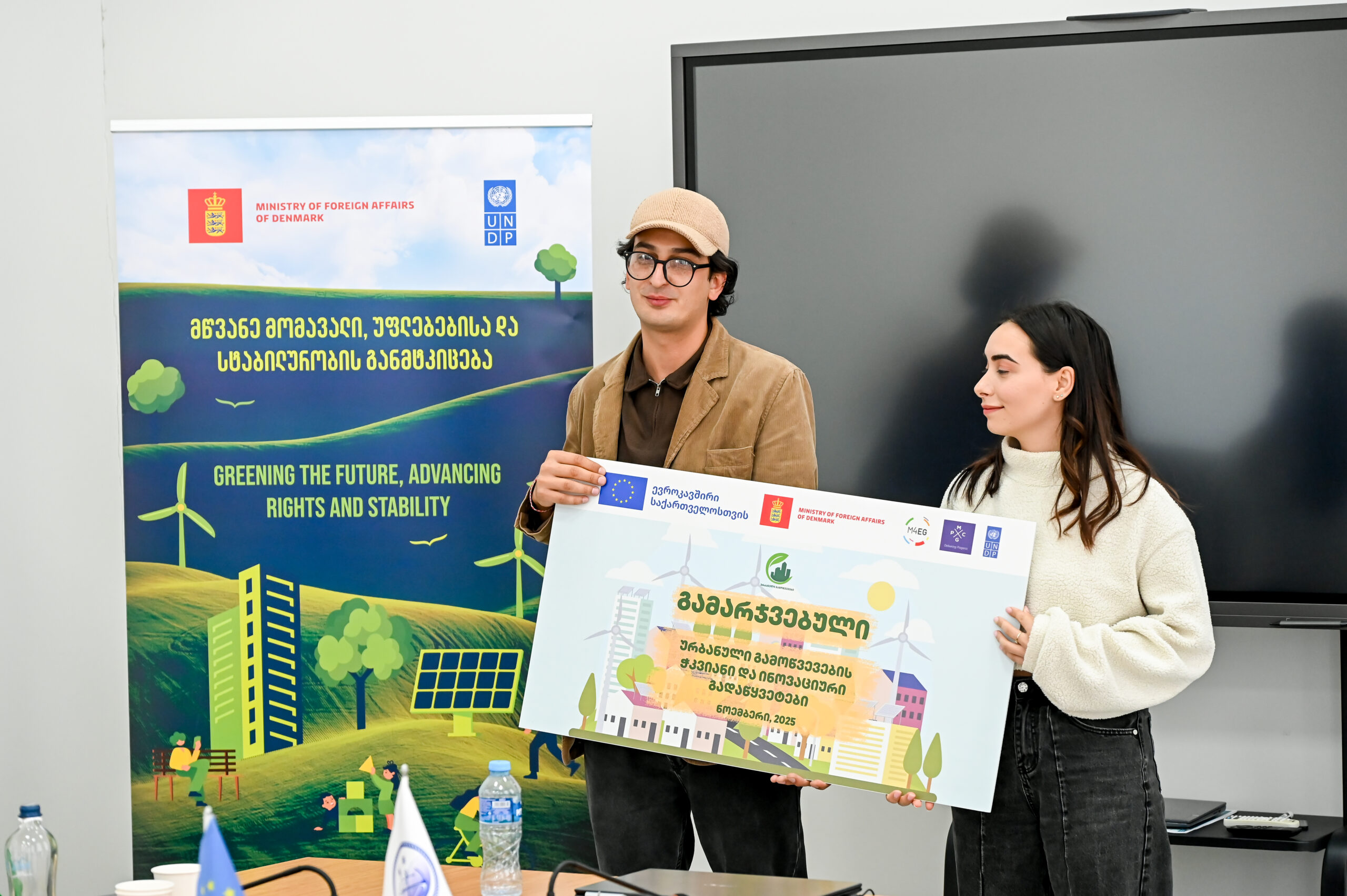
With the winners now selected, the City Challenge moves into the demonstration and prototyping stage. Over the next 8–12 weeks, PMCG and UNDP will provide necessary funding, technical and human resource needs, and will work alongside mentors to turn their ideas into functioning prototypes within their cities.
The pilot solutions developed through this initiative will serve as practical, scalable examples of how Georgian cities can embrace sustainability, community engagement, and innovation.